Reservoir

As Egypt’s largest oil and gas investor, Eni is ramping up its 2026–2027 drilling campaign with new investments cross the Mediterranean offshore, Nile Delta, Western Desert, and offshore Sinai to strengthen the country’s role as a regional gas and LNG export hub.

This paper presents an experiment investigating dissolution of basaltic primary minerals and conditions favorable for secondary phase formation under deep subsurface storage conditions.

This study aims to investigate the efficacy of chemical additives strontium chloride and barium hydroxide in accelerating CO₂ trapping mechanisms, their effect on dissolution of carbonate-bearing minerals, and resulting poroelastic changes in the host rock.
-
 The paper provides information to engineers for selecting high-viscosity friction reducers and describes a methodology for evaluating damage potential and proppant transport.
 -
The principles behind unconventional wells lead to production profiles very different from conventional wells. High initial-production rates drop to much lower rates in a matter of months or a few years. How many in the US are currently considered low-production-rate wells?
-
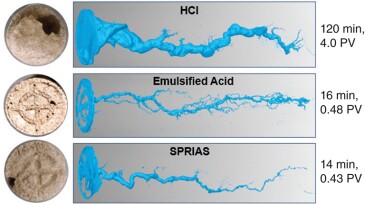
The authors describe the benefits of a single-phase retarded inorganic acid system, which they write features the same benefits as emulsified acids while eliminating the drawbacks of the latter.
-
The paper presents the challenges faced and overcome while drilling and testing a high-pressure/high-temperature sour-gas well offshore in an environmentally sensitive environment.
-
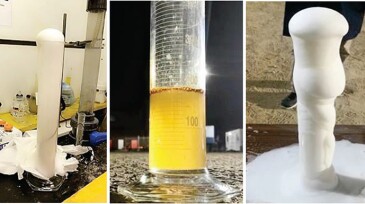
This paper presents a novel sandstone-stimulation technique using thermochemical fluids.
-
This paper presents a well-integrity-management system developed for a high-pressure/high-temperature gas field in southwest China.
-
Deal expands PDC's D-J Basin holdings into northern Adams County, Colorado.
-
Rodolfo Camacho-Velázquez identifies areas of opportunity for future reservoir engineers related to the technical challenges of increased production and recovery of complex conventional and unconventional reservoirs, the application of Fourth Industrial Revolution technologies in reservoir subdisciplines, and the energy transition.
-
The acquisition adds well completions services for conventional and unconventional reservoirs.
-
Houston-based startup Cemvita Factory is launching a project to produce near-zero-carbon gold hydrogen by injecting oil-eating microbes into depleted crude reservoirs.