Reservoir
This study demonstrates how routinely acquired downhole temperature data allows for direct estimation of fluid saturations and delivers more accurate reservoir volume assessments, particularly in aquifer-supported systems.

Sponsored
Effective data analysis depends on seeing connections that matter. Explore how Spotfire enables a more intuitive approach to understanding petroleum data.

The deal adds over 1,000 potential drilling locations and almost doubles oil production for Houston-based Magnolia.
-
 The rise of cube developments in the Permian Basin has introduced a new way of thinking for some of the region’s biggest players.
 -
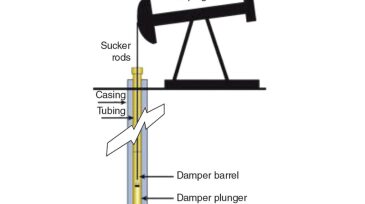
Seismic stimulation, achievable with the implementation of a single tool, requires significantly lower investments than gas, thermal, and chemical injection methods, with minimal environmental impact.
-
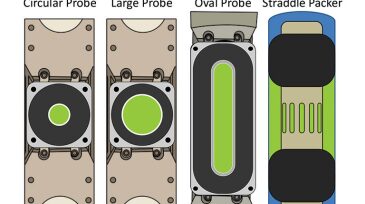
This paper bridges the gap between operational petrophysicists and FTS specialists, introducing an automated work flow by which petrophysicists can conduct FTS jobs.
-
This paper aims to develop new and improved empirical viscosity correlations through available field measurements on the Norwegian Continental Shelf (NCS).
-
What effects will Industrial Revolution 4.0 have on the upstream oil and gas businesses in general and petrophysics in particular? We should see more intelligence and automation in measurements, processes, work flows, and operations.
-
An international committee of reserves evaluation experts has completed the revision of the Petroleum Resources Management System (PRMS). The SPE Board approved it in June 2018.
-
BP ends a year of speculation as to who will buy BHP Billiton’s much-coveted US unconventional business, transforming its Lower 48 portfolio in the process.
-
Today’s advancements in unconventional technology are worth marveling over, but there is still plenty of room for growth.
-
The report card for unconventional oil and gas producers from a leading industry analyst is A+ for growth and F- for paying back investors.
-
SponsoredBy adopting enhanced oil recovery (EOR) techniques, the amount of oil that could be recovered could be increased by as much as 30% to 70%. Low Salinity Water Flooding (LSWF) is flexible and has a low cost, with a readily accessible feedstock – seawater.