Reservoir

This paper discusses waterflooding and field-development implications of subsea seawater treatment for improved oil recovery.

This paper presents laboratory-testing methods and evaluation criteria designed to improve understanding of both the origin and extent of formation damage associated with CO2 injection.

This paper details the design and implementation of a subsea multiphase pump solution deployed in the Atlanta field designed to maximize reuse of existing subsea and topside equipment.
-
 The authors write that, by wireline formation testing of a sandstone formation adjacent to a sand/shale laminated reservoir in the Weizhou shale-oil region of the Beibu Gulf, key reservoir information can be directly obtained.
 -
This paper presents a complete digital workflow applied to several greenfields in the Asia Pacific region that leads to successful deep-transient-testing operations initiated from intelligent planning that positively affected field-development decisions.
-
This study introduces a cleanup- and flowback-testing approach incorporating advanced solids-separation technology, a portable solution, equipment automation, improved metallurgy, and enhanced safety standards.
-
Technical papers reviewed for this feature are laden with novel technology borne of the quest to understand and solve complex geological structures and features that ultimately will improve our collective effort toward fostering efficient energy production. The three papers presented here are focused on innovative approaches to handling such complexities.
-
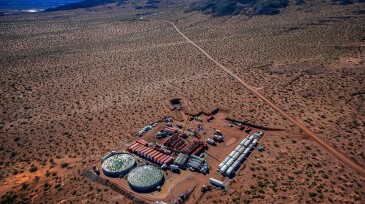
A Shell partnership with YPF marks a significant milestone for the Argentina LNG export facility, raising new questions about the nation’s potential to unlock the economic power of its vast shale reserves.
-
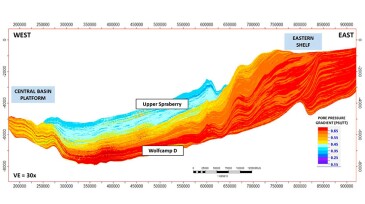
Regional pore-pressure variations in the Leonardian- and Wolfcampian-age producing strata in the Midland and Delaware basins are studied using a variety of subsurface data.
-
As reservoir complexity and energy-transition demands grow, the industry is developing new logging technologies, integrating multidisciplinary functions, and conducting new experiments to address new challenges. This Technology Focus highlights three papers from conventional, unconventional, and carbon-storage projects.
-
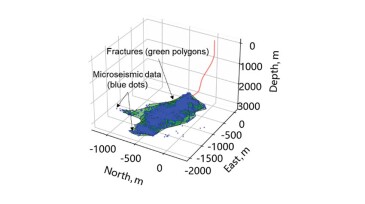
In this paper, an energy-based 3D fracture-reconstruction method is proposed to derive the complex fracture network from microseismic data in a shale gas reservoir.
-
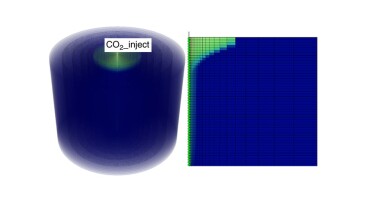
The study uses laboratory and digital core analyses of Berea sandstone to estimate petrophysical and dynamic properties for adjustment of predicted precipitation and flow reduction in reservoir simulation models of intermittent CO₂ injection with aquifer drive.
-
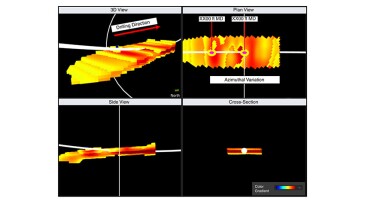
This paper presents a novel workflow for using electromagnetic resistivity-based reservoir mapping logging-while-drilling technologies for successful well placement and multilayer mapping in low-resistivity, low-contrast, thinly laminated clastic reservoirs.