Reservoir
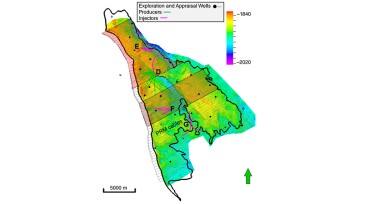
This study demonstrates how routinely acquired downhole temperature data allows for direct estimation of fluid saturations and delivers more accurate reservoir volume assessments, particularly in aquifer-supported systems.

Sponsored
Effective data analysis depends on seeing connections that matter. Explore how Spotfire enables a more intuitive approach to understanding petroleum data.

The deal adds over 1,000 potential drilling locations and almost doubles oil production for Houston-based Magnolia.
-
 The Calgary-based shale producer said the deal involves at least 600 new well locations that will keep it drilling for the next 20 years.
 -
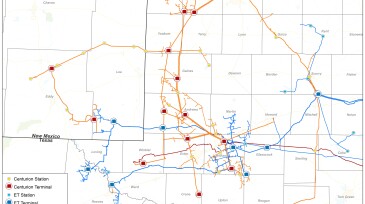
The acquisition will enable Energy Transfer to send more barrels of Permian crude to oil hub at Cushing, Oklahoma.
-
This article presents a new data-driven analysis to locate low-frequency seismic sources, referred to as near-infrasound or infrasound sources. Combining these infrasound signals with microseismicity signals allows for better characterization and monitoring of the stimulated reservoir volume.
-
The array of papers received for review this year covers a wide spectrum, both in applications and research, which indicates that the exploration and production industry is actively working to monetize high-pressure/high-temperature reservoirs.
-
The authors of this paper evaluate the effectiveness of production-enhancement activities for a long-string, gas-lifted producer using distributed-temperature-sensing technology.
-
From refracturing old wells to ones that don’t have to be fractured at all, notable producers argue that experiments are paying off.
-
The authors of this paper present results of a study that examined formation-damage mechanisms caused by drilling fluids in tight reservoirs in onshore oil fields in Abu Dhabi.
-
The authors of this paper present a laboratory-based model to determine the detachment of authigenic and detrital particles in formation damage.
-
The authors of this paper write that 4D data are an integral part of a reservoir-management program and, together with geological and production history data, are being used to update reservoir models to further the goals of field development.
-
The authors of this paper discuss a biosurfactant treatment that offers an economical method for remediation of formation damage caused by high-molecular-weight paraffin wax deposition in porous media.