Reservoir
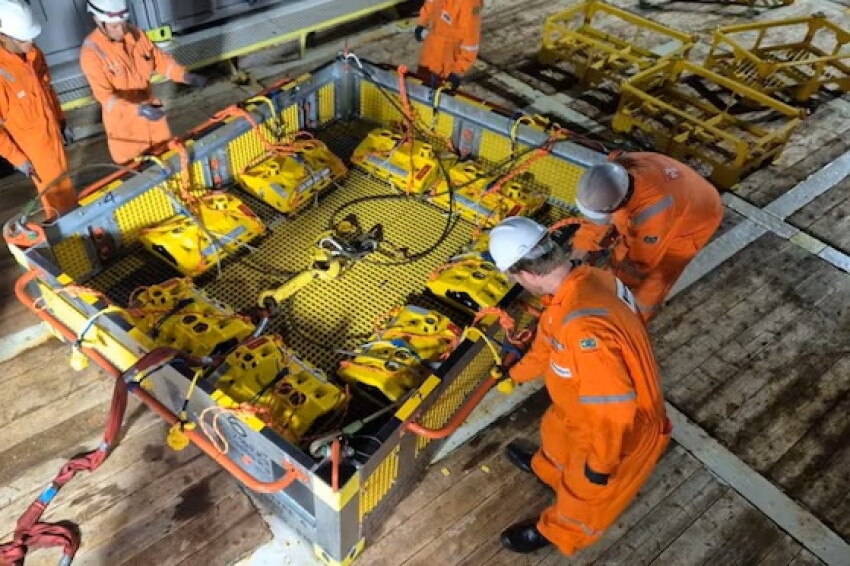
The technology has passed its first phase of qualification, with 84 nodes placed on the seafloor at a depth of 2,000 m to acquire 4D seismic data in the pre-salt Santos Basin.

Chevron and Halliburton describe how they built and deployed the fully autonomous closed-loop fracturing system that enables subsurface-driven optimization.

This article from the SPE Integrated Reservoir Management Technical Section (IRMTS) addresses decision timing across the reservoir cycle.
-
 A dissolvable collet field tested in an unconventional completion led to an average running time of 32 minutes per stage in a vertical section and 19 minutes per stage in the horizontal section.
 -
The rise in energy consumption and increasing demand for energy security worldwide warrants the need to increase global hydrocarbon production. Current circumstances dictate focusing on low-cost and low-carbon EOR barrels to secure energy supply in the shorter term while continuing to develop innovative technologies and strategies for enhancing production in the longe…
-
In Part 2 of a series of articles, the author focuses on generating a connection between the problem types and various methods of trying to solve these problems.
-
Artificial intelligence (AI) tools have been used in geological survey methods for many years. Gaining insight into the scale and trends of this implementation could assist surveyors in making informed decisions about buying or developing new technologies.
-
Eagle Ford sees ‘surprising resurgence’ as buyers look to secure the play’s mature assets.
-
The independent sells out of south Texas shale, while expanding its Permian presence in separate deals.
-
SponsoredThis Q&A highlights the benefits of AI and ML to automate work flows and analyze data at a much faster rate—within minutes. These capabilities deliver a fit-for-basin approach designed specifically for US-centric work flows.
-
This paper describes the building of a geomechanical model for an offshore field that integrated drilling, geology, petrophysics, and reservoir data to play a major role in the drillability and deliverability of the reservoir.
-
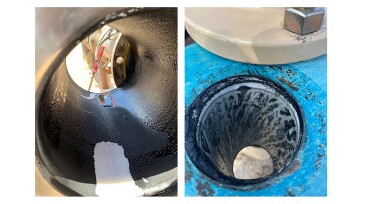
Paraffin deposition on the meters measuring produced water volumes causes inaccurate readings. New technology solutions enable lasting accuracy in the place of routine maintenance that provides a temporary solution.
-
Several options exist for large-scale hydrogen underground storage: lined caverns, salt domes, saline aquifers, and depleted oil/gas reservoirs. In this paper, a commercial reservoir simulator was used to model cyclic injection/withdrawal from saline aquifers and depleted oil/gas reservoirs. The results revealed the need to contain the stored volume with an integrated…