Reservoir

Industry experts at URTeC assessed more than a decade of unconventional growth while discussing where productivity gains will come from next.
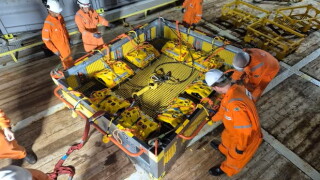
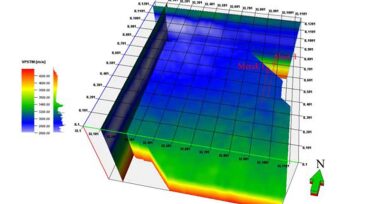
The technology has passed its first phase of qualification, with 84 nodes placed on the seafloor at a depth of 2,000 m to acquire 4D seismic data in the pre-salt Santos Basin.

Chevron and Halliburton describe how they built and deployed the fully autonomous closed-loop fracturing system that enables subsurface-driven optimization.
-
 The complete paper explores the use of multilevel derivative-free optimization for history matching, with model properties described using principal component analysis (PCA) -based parameterization techniques.
 -
This paper discusses a prescriptive analytics framework to optimize completions in the Permian Basin.
-
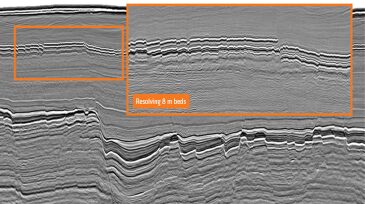
An ultrahigh-density high-resolution data set from the Hammerfest Basin is now available from PGS. The area is thought to contain around half of the undiscovered resources on the Norwegian continental shelf, according to the Norwegian Petroleum Directorate.
-
SponsoredDeveloping a reservoir with current capex constraints requires innovative technology to provide reliable reservoir production insight. This article describes how chemical tracer technologies can be integrated into reservoir development plans to reduce risk, minimize capex, and maximize ROI.
-
In this study, the authors use a quantitative seismic interpretation work flow (QSI) based on a rock-physics template in estimating the uncertainty of the geochemical properties of organic mudrocks of the Shublik formation of the Alaskan North Slope.
-
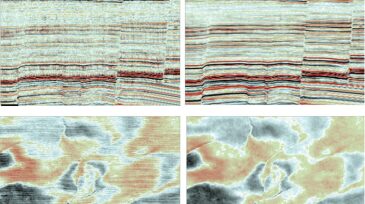
In this paper, the authors propose a least-squares Q migration (LSQM) method that combines the benefits of both LSM and Q prestack depth migration (QPSDM) to improve the amplitude fidelity and image resolution of seismic data.
-
One would think that, in these challenging times, high-pressure/high-temperature technology and projects would be put on the back burner, with everybody chasing zipper-fractured barrels from shale. Well, it is not so.
-
Happily, in this past year, we witnessed several examples of marriage between two themes—exciting technology advances and the recent economic downturn. In other words, necessity for survival in hard times provided the impetus for innovation.
-
Saudi Arabia offers a seemingly bottomless supply of oil and an equally deep array of exploration challenges as well.
-
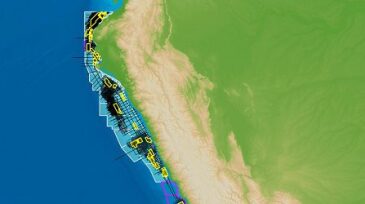
The seismic-data company has announced the completion of its offshore Peru 2D and 3D seismic data set, consisting of 19 rectified and merged 2D seismic surveys and 21 rectified and merged 3D seismic surveys.