Reservoir

This study explores the carbon-capture and mineralization potential of ultramafic rock powders when exposed to flue gases generated from combustion of crude oil and mesquite-derived charcoal.

This paper documents the testing, integration, and field deployment of a metal expandable packer used as an openhole toe isolation plug in a deepwater well under high-pressure, high-temperature conditions.

Three papers are highlighted as the primary contributions because of their broad industry relevance. They focus on improving formation particle-size characterization, expanding the application of openhole gravel packs in depleted and compartmentalized reservoirs, and advancing the understanding of capillary pressure in sand production.
-
 Proved oil reserves totaled 43.8 billion bbl at yearend 2018 while proved gas reserves amounted to 504.5 Tcf, both topping records set in 2017, the US Energy Information Administration said.
 -
For the past 20 years, the diagnostic fracture injection test has been used across the frontlines of the shale revolution to paint a picture of what cannot be seen. However, that picture has not always been so clear in the eyes of subsurface engineers.
-
Current efforts demonstrate that industry is undertaking responsible scientific, social, and environmental management.
-
This paper presents a methodology that provides the upstream industry with a robust approach to petroleum inventory management.
-
This paper presents a coupled 3D fluid-flow and geomechanics simulator developed to model induced seismicity resulting from wastewater injection.
-
Fluid saturation isn't what it used to be when it comes to unconventional reservoirs. Our guest is among those sharing new research to discuss the shale sector’s changing perspectives on the importance of mobile hydrocarbons vs. immobile hydrocarbons.
-
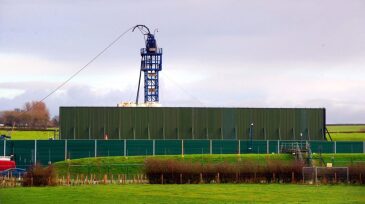
The decision comes 2 months after UK shale operator Cuadrilla Resources halted stimulation work at its Preston New Road site in Lancashire because of a magnitude 2.9 seismic event.
-
This study focus on the design and evaluation of a customized water-based mud (NP-WBM) using silica oxide nanoparticles (SiO2-NPs) and graphene oxide nanoplatelets (GNPs).
-
The objective of the study described in this paper was to investigate the feasibility of huff ‘n’ puff enhanced oil recovery (EOR) in a gas-condensate reservoir.
-
The complete paper describes a Monte Carlo simulation approach and field analysis showing that a small-scale GTL plant in North Dakota could be a profitable solution to mitigating the state’s current flaring rate of 35% of the natural gas produced.