Reservoir

This study explores the carbon-capture and mineralization potential of ultramafic rock powders when exposed to flue gases generated from combustion of crude oil and mesquite-derived charcoal.

This paper documents the testing, integration, and field deployment of a metal expandable packer used as an openhole toe isolation plug in a deepwater well under high-pressure, high-temperature conditions.

Three papers are highlighted as the primary contributions because of their broad industry relevance. They focus on improving formation particle-size characterization, expanding the application of openhole gravel packs in depleted and compartmentalized reservoirs, and advancing the understanding of capillary pressure in sand production.
-
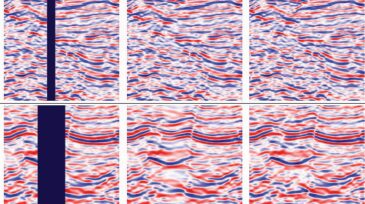
 Seismic imaging provides vital tools for the exploration of potential hydrocarbon reserves and subsequent production-planning activities. The acquisition of high-resolution, regularly sampled seismic data may be hindered by physical or financial constraints.
 -
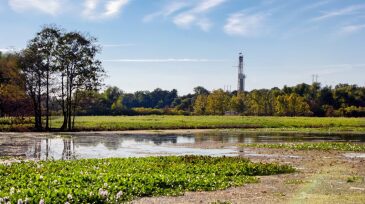
ConocoPhillips has pulled out of the much-hyped Louisiana Austin Chalk play after the company’s test wells yielded a gusher of water. Meanwhile, an Australian operator flying under the radar continues to pursue the adjacent-but-even-more-challenging Tuscaloosa Marine Shale.
-
Figuring out how far apart to place horizontal wellbores remains one of the biggest challenges facing the future of the shale revolution. One roadblock appears to be the way in which the sector has traditionally measured these distances.
-
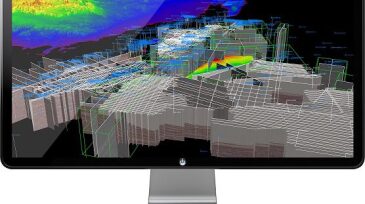
The engineering and technology company announced its entire exploration and production software suite is now available on the cloud, enabling oil and gas companies to take advantage of digital technologies securely and to model and optimize production better.
-
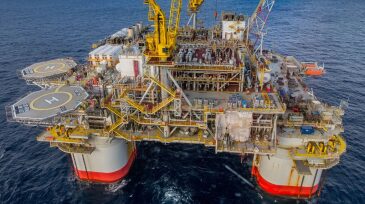
The project aims to contribute an estimated ultimate recovery of more than 175 MMboe from one of the company’s signature deepwater projects in the US Gulf of Mexico.
-
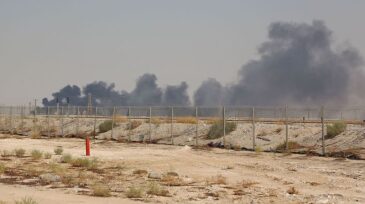
Tensions in the region spike as US blames Iran.
-
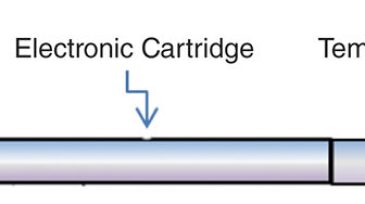
The objective of this study was to look at factors that can affect a temperature log and steps that can be taken to improve temperature-measurement accuracy.
-
This paper presents a data set involving the pumping of multiple, unique chemical tracers into a single Wolfcamp B fracture stage.
-
The complete paper describes a physics-based model of interference and a sensitivity study to propose guidelines for well spacing and a drilling timeline for multiple horizontal wells in the Vaca Muerta shale.
-
The Russian company has built a computing cluster in St. Petersburg designed to generate digital twins of oil fields. The new distributed-computing system is capable of processing more than 100 gigabits per second, speeding up the digital-modeling process five-fold.