Reservoir

This study explores the carbon-capture and mineralization potential of ultramafic rock powders when exposed to flue gases generated from combustion of crude oil and mesquite-derived charcoal.

This paper documents the testing, integration, and field deployment of a metal expandable packer used as an openhole toe isolation plug in a deepwater well under high-pressure, high-temperature conditions.

Three papers are highlighted as the primary contributions because of their broad industry relevance. They focus on improving formation particle-size characterization, expanding the application of openhole gravel packs in depleted and compartmentalized reservoirs, and advancing the understanding of capillary pressure in sand production.
-
 Although the wellbore is in a nonisothermal environment, heat transfer between the fluid in the wellbore and the formation is often ignored and temperature is usually assumed constant in data interpretation, which will lead to misunderstanding of the pressure profile.
 -
Over the past year, despite the naysayers’ comments and predictions, the usual creativity and ingenuity of engineers and scientists in the oil industry were ubiquitous.
-
Developers of the latest generation of unconventional hydraulic fracturing models are hoping that current weak oil and gas prices will generate newfound interest in their software technology.
-
This article describes how the use of a biological EOR technique that applied produced water for reservoir flooding in a mature field led to rapid and substantial increases in oil production.
-
With the world’s fifth-largest estimated shale gas reserves, there is great potential for Saudi Arabia to replicate North America’s unconventional growth.
-
A strategic objective of Saudi Aramco is exploring and developing deep and unconventional gas reservoirs, many of which are considered extremely tight.
-
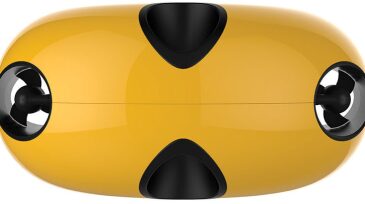
Autonomous Robotics’ first offering is built around a rounded yellow device that looks like a little flying saucer.
-
The authors present a method to reduce uncertainty in EOR performance adaptively while identifying an optimal operational strategy for a given tolerance to risk.
-
Conventional miscible- or near-miscible-gasflood simulation often overestimates oil recovery, mostly because it does not capture a series of physical effects tending to limit interphase compositional exchanges.
-
The Bakken’s ultratight, largely oil-wet nature limits the potential of waterflooding. As an alternative, an optimally spaced well-to-well surfactant-flooding technology is proposed.