Reservoir

This study explores the carbon-capture and mineralization potential of ultramafic rock powders when exposed to flue gases generated from combustion of crude oil and mesquite-derived charcoal.

This paper documents the testing, integration, and field deployment of a metal expandable packer used as an openhole toe isolation plug in a deepwater well under high-pressure, high-temperature conditions.

Three papers are highlighted as the primary contributions because of their broad industry relevance. They focus on improving formation particle-size characterization, expanding the application of openhole gravel packs in depleted and compartmentalized reservoirs, and advancing the understanding of capillary pressure in sand production.
-
 Casing deformation has emerged as a major challenge in China’s unconventional oil and gas fields, prompting the development of new solutions to address the issue.
 -
The transaction adds 267,000 net acres and nearly 140,000 BOE/D from Vital Energy, lifting Crescent into the top 10 largest US independents.
-
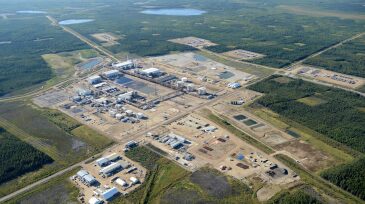
The latest acquisition strengthens Cenovus Energy’s position as Canada’s largest SAGD producer.
-
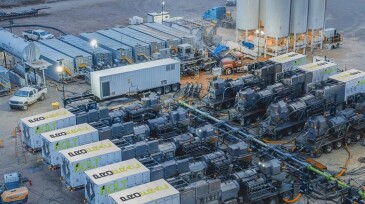
The collaboration has announced Closed Loop Fracturing, which combines real-time subsurface data with automated surface control.
-
Shale’s slowdown leaves room for OPEC+ gains as tensions rise between the US and India over Russian oil imports.
-
The number of high-impact wells drilled across the globe this year are expected to be on trend with the most recent 5-year average.
-
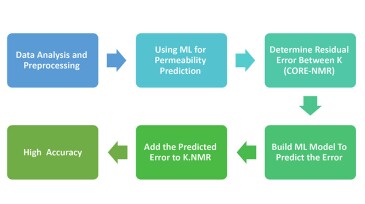
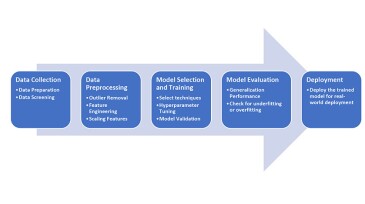
This study integrates physics-based constraints into machine-learning models, thereby improving their predictive accuracy and robustness.
-
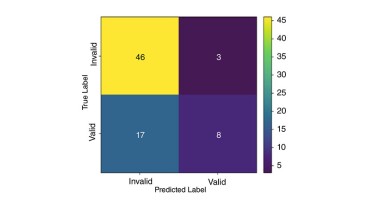
This paper introduces a machine-learning approach that integrates well-logging data to enhance depth selection, thereby increasing the likelihood of obtaining accurate and valuable formation-pressure results.
-
This study aims to use machine-learning techniques to predict well logs by analyzing mud-log and logging-while-drilling data.
-
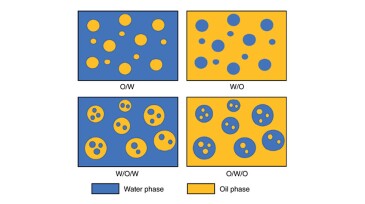
This study presents the development of a novel modeling tool designed to predict condensate emulsions, focusing on key factors causing emulsions such as pH, solid content, asphaltene concentration, droplet size, and organic acids.