Reservoir

Three papers are highlighted as the primary contributions because of their broad industry relevance. They focus on improving formation particle-size characterization, expanding the application of openhole gravel packs in depleted and compartmentalized reservoirs, and advancing the understanding of capillary pressure in sand production.

This paper aims to establish a set of best practices for generating particle-size-distribution data from core samples.

This paper discusses the successful execution of two openhole gravel-pack completions in two Gulf of Mexico fields with depleted reservoirs.
-
 Geochemical parameters such as total organic carbon (TOC) provides valuable information to understand rock organic richness and maturity and, therefore, optimize hydrocarbon exploration. This article presents a novel work flow to predict continuous high-resolution TOC profiles using machine learning.
 -
The US onshore business is looking flat at the moment, though these sorts of predictions are prone to sudden shifts.
-
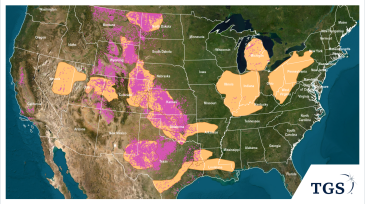
SponsoredIn a partnership with the American Institute of Formation Evaluation, TGS is now the only US data vendor offering report-sourced drillstem tests, available through TGS Well Data Analytics.
-
Dos Caminos joint venture additions will be capable of delivering 2.0 Bcf/D of natural gas.
-
Private-equity producer adds over 160,000 acres in Wyoming’s Powder River Basin oil play.
-
As the demand for energy continues to increase, so does the sociopolitical demand that these resources be produced in a sustainable way. This reflective thought has defined this month’s selection of technical papers, each speaking to a different facet of this feature’s theme: unconventional reservoir development for a sustainable energy transition.
-
This paper describes natural fractures and their effect on hydrocarbon productivity in the Vaca Muerta shale formation.
-
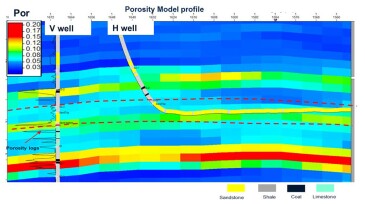
The authors of this paper describe a solution using machine-learning techniques to predict sandstone distribution and, to some extent, automate the process of optimizing well placement.
-
This study catalogs global gas/oil ratio data to identify currently produced light crude oils that could be rendered carbon neutral through the direct-air-capture mechanism.
-
A new program offers an affordable way to figure out if salt precipitation could be behind underperforming gas wells and suggests a path to higher production.