

Risk management

Sponsored
Effective data analysis depends on seeing connections that matter. Explore how Spotfire enables a more intuitive approach to understanding petroleum data.

After a record year for LNG project approvals in 2025, multiyear repairs to war-damaged liquefaction facilities in Qatar and the UAE threaten to slow the growth of global LNG capacity.
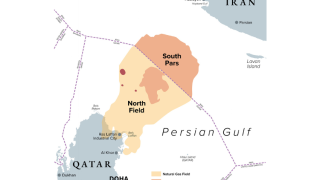
Barzan plant explosion that killed 13 and injured 66 occurred 2 days after production was restarted following a scheduled shutdown in December for routine maintenance.
-
 As low as reasonably practicable (ALARP) is common for management of safety risks, but harder to apply to environmental risks. This paper explores the differences and proposes a modified method to support environmental risk analysis.
 -
We are comfortable with the reality of swift intuitive judgement being the primary decision-making approach of experienced engineers in emergency situations. But as the engineer in the situation has less experience available to him/her, how do psychological factors affect outcomes?
-
The understanding of decision-making processes is critical in ensuring project success and safety. Project failures—and disasters—can result from the lack of understanding or implementation of sound principles.
-
In spite of massive investments in project management best practices and the organizations to implement them, major oil and gas projects continue to experience cost overruns and schedule delays. A root cause that has not been sufficiently explored is the built-in bias toward overconfidence.
-
In this paper, a data-driven model is applied to derive optimum maintenance strategy for a petroleum pipeline. The model incorporates structured expert judgment to calculate the frequency of failure, considering various failure mechanisms.
-
Cost estimation for facilities depends on early concept selection and critical inputs, often complicated by uncertainty in one or more of the critical inputs. Empirical cost models and cost modeling methods using these inputs vary in degrees of scope, comprehensiveness, and robustness.
-
Engineers in the oil and gas industry make tough decisions for a wide variety of issues, including risk and safety, and about design and other types of tradeoffs, as well as operational assessments.





Page 19 of 19