Safety

This study ascertains the capital expenditure and operating expenditure associated with the reuse of existing facilities, specifically regarding a carbon capture and storage project being prepared in South Korea.

Sponsored
Advance your career with the new Pipeline Engineering Program at the Technical University of Leoben, a 5-month course combining on-campus and online learning, integrating industry expertise, engineering practice, and future-ready skills for professionals in oil, gas, and emerging energy systems.

A resilience-based approach to safety was the focus of a panel of experts at the 2025 SPE Annual Technical Conference and Exhibition in Houston.
-
"Our safety record is unacceptable, and improvements must be made," Kris Smith said.
-
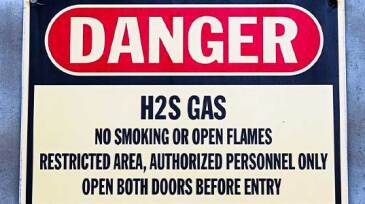
 Given that hydrogen sulfide is such a risk to workers, care must be taken to protect and prevent exposure, particularly when working with lesser-known methods and in more dangerous settings, such as sour-gas fields and the sweetening process.
 -
The paper provides an approach to mitigating the adverse effects of mercury found in production fields, including treatment-facility requirements and suitable technologies for production fields and onshore facilities.
-
This paper highlights solids-management technologies that are currently available and still in use topside (some of which are potentially outdated).
-
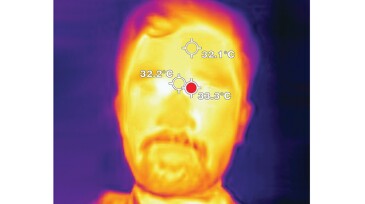
This paper explains how machine learning and physiology can be used to improve rig technical training by monitoring the operator’s stress, leading to targeted training to manage such situations better.
-
Connected safety is growing, including in the oil patch. And it is tied to the wearable technology so prevalent today.
-
A new funding opportunity is available for early-career researchers interested in safety and risk management issues related to offshore energy activities.
-
The two organizations recently signed a letter of cooperation. The agreement creates an opportunity to accelerate the practical application of human factors in the energy industry and create a bridge between energy industry professionals and human factors experts.
-
HiberHilo will be used to monitor remote oil and gas wells in Papua New Guinea, providing real-time performance and safety data.
-
Together in Safety’s recent report “Future Fuels Risk Assessment” uses operational scenarios across industries to evaluate the safety implications of using methanol, LNG, hydrogen, and ammonia as fuel.