Safety

As drilling operations become increasingly digital, computer vision is emerging as a continuous safety layer that complements, not replaces, established safety practices. The challenge is no longer whether artificial intelligence can detect hazards, but how operators should deploy, integrate, and govern these systems to improve safety without adding operational comple…

This paper explores how artificial intelligence (AI), cognitive models, and integrated digital tools can transform readiness from periodic drills into a continuous, measurable capability.

This paper presents a competency-cenetered, data-driven approach implemented to strengthen control-room emergency-response capability through a cloud-hosted, scenario-based virtual plant simulator.
-
"Our safety record is unacceptable, and improvements must be made," Kris Smith said.
-
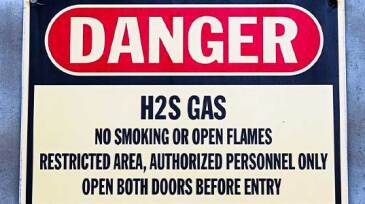
 Given that hydrogen sulfide is such a risk to workers, care must be taken to protect and prevent exposure, particularly when working with lesser-known methods and in more dangerous settings, such as sour-gas fields and the sweetening process.
 -
The paper provides an approach to mitigating the adverse effects of mercury found in production fields, including treatment-facility requirements and suitable technologies for production fields and onshore facilities.
-
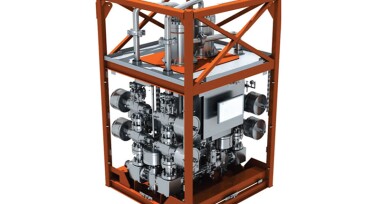
This paper highlights solids-management technologies that are currently available and still in use topside (some of which are potentially outdated).
-
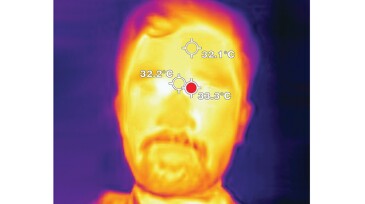
This paper explains how machine learning and physiology can be used to improve rig technical training by monitoring the operator’s stress, leading to targeted training to manage such situations better.
-
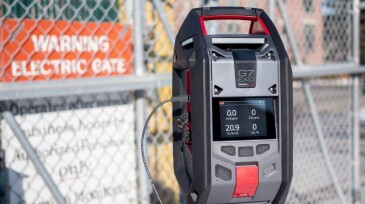
Connected safety is growing, including in the oil patch. And it is tied to the wearable technology so prevalent today.
-
A new funding opportunity is available for early-career researchers interested in safety and risk management issues related to offshore energy activities.
-
The two organizations recently signed a letter of cooperation. The agreement creates an opportunity to accelerate the practical application of human factors in the energy industry and create a bridge between energy industry professionals and human factors experts.
-
HiberHilo will be used to monitor remote oil and gas wells in Papua New Guinea, providing real-time performance and safety data.
-
Together in Safety’s recent report “Future Fuels Risk Assessment” uses operational scenarios across industries to evaluate the safety implications of using methanol, LNG, hydrogen, and ammonia as fuel.