Safety

As drilling operations become increasingly digital, computer vision is emerging as a continuous safety layer that complements, not replaces, established safety practices. The challenge is no longer whether artificial intelligence can detect hazards, but how operators should deploy, integrate, and govern these systems to improve safety without adding operational comple…

From AI-enabled walking rigs to subsea drones and autonomous inspection robots, robotics is rapidly moving from pilot projects to field deployment. The technology promises not only greater efficiency but also a fundamental shift in how the industry approaches safety and asset management.

This paper explores how artificial intelligence (AI), cognitive models, and integrated digital tools can transform readiness from periodic drills into a continuous, measurable capability.
-
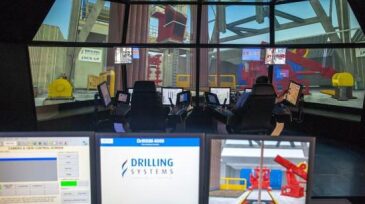
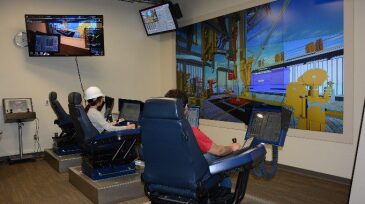
 The Oil and Gas Institute at Robert Gordon University is working with Drilling Systems and its drilling, well-control, and lifting simulator technology to help oil and gas companies identify ways to improve efficiencies and raise safety standards.
 -
Culture, not controls, will drive the next phase of industry safety evolution, said presenters at a recent HSE conference.
-
The guidance focuses on the business purpose of health services in the oil and gas sector and the additional value that effective leadership around health and human performance can bring.
-
Knowledge is at the risk of being lost in the oil and gas industry. Other industries have shown ways it can be retained by building mechanisms for knowledge retention into the safety management system.
-
For the first time, the University of Oklahoma has offered a Human Factors in Oil and Gas Operations class. The offered course fulfilled the mission of training petroleum engineering students to make an impact on oil and gas industry.
-
Following up the petroleum industry’s work with digital technology and security is a priority area at the Petroleum Safety Authority Norway. A key target for this supervision in 2019 will be helping the sector to improve safety and the working environment.
-
A report from Norway’s Auditor General criticizes several aspects of the way health, safety, and the environment in the Norwegian oil and gas industry is followed up by the Petroleum Safety Authority Norway.
-
A 3-year study that demonstrated how to capture a worker’s safety performance and translate the data into personal fatigue levels is the first step in creating a framework that can identify research-supported interventions that protect workers from injuries caused by being tired on the job.
-
Companies waste countless resources measuring the wrong things, not measuring at all, or failing to keep "the most important thing, the most important thing."
-
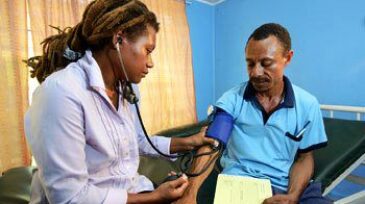
As part of the Papua New Guinea Liquefied Natural Gas project, a systematic longitudinal effort was made to collect a broad range of morbidity and mortality data for those communities directly adjacent to the project. These data were used to inform workplace disease-monitoring efforts.