Safety

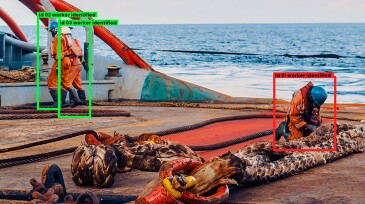
As drilling operations become increasingly digital, computer vision is emerging as a continuous safety layer that complements, not replaces, established safety practices. The challenge is no longer whether artificial intelligence can detect hazards, but how operators should deploy, integrate, and govern these systems to improve safety without adding operational comple…

This paper explores how artificial intelligence (AI), cognitive models, and integrated digital tools can transform readiness from periodic drills into a continuous, measurable capability.

This paper presents a competency-cenetered, data-driven approach implemented to strengthen control-room emergency-response capability through a cloud-hosted, scenario-based virtual plant simulator.
-
 The year, marked by a fatal accident in February, finished with a decrease in accidents and spills.
 -
From optimizing drilling performance to enhancing worker safety, computer vision can change how the industry works.
-
The update is designed to improve the accuracy and completeness of reported data, reduce the time needed to complete the form, and support deeper understanding of equipment failures.
-
This paper discusses and demonstrates the limitations of quantitative risk assessments (QRA) with respect to the usefulness of the concept in managing day-to-day and emerging risks as well as the effect of change. The paper goes on to discuss improved solution sets compared with pure reliance on QRA.
-
“Riskwashing” refers to a situation where an organization engages in superficial or insincere actions to create the appearance of addressing a particular risk or issue without actually taking substantive action to address the underlying problem. This paper presents methods to identify and minimize riskwashing as an organizational response to incidents.
-
This paper presents a method of geomechanical-risk screening and gives examples of its positive effect on the company’s safety standards through implementation of integrated solutions to prevent or mitigate the risks.
-
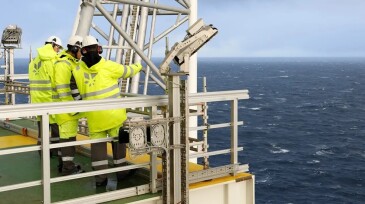
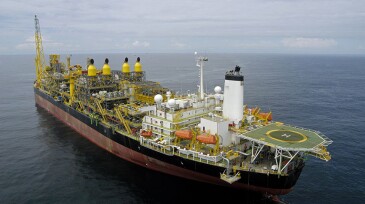
This paper presents the operator’s learnings in evaluating the routine of a floating production, storage, and offloading asset crew to identify scenarios for the application of robotics in day-to-day offshore activities.
-
This paper describes the development of guidelines to determine the most suitable corrosion-resistant alloys for downhole injection equipment in wells for carbon capture and storage and carbon capture, use, and storage.
-
GE Vernova and Vineyard Wind provided an update on the implementation of their plan to safely remove the remainder of the damaged blade on turbine AW-38, remove any remaining debris, complete environmental studies, implement actions for blade readiness for service, and, ultimately, resume turbine installation and operations.
-
Technology uptake aimed at optimizing resources, delivering consistency, and augmenting what humans can do.