Safety

As drilling operations become increasingly digital, computer vision is emerging as a continuous safety layer that complements, not replaces, established safety practices. The challenge is no longer whether artificial intelligence can detect hazards, but how operators should deploy, integrate, and govern these systems to improve safety without adding operational comple…

This paper describes an emergency-response system deployed on artificial islands that manages complex challenges, enhances safety protocols, and improves operational efficiency in high-risk offshore environments.

This paper explores how artificial intelligence (AI), cognitive models, and integrated digital tools can transform readiness from periodic drills into a continuous, measurable capability.
-
 Hans Leo Hals, managing director for Trelleborg’s offshore operation based in Norway, met with leading oil and gas representatives in Mexico over a number of months to support improving the safety of Mexico’s offshore assets in the Gulf of Mexico.
 -
Southwest Research Institute has developed a leak detection system to autonomously monitor pipelines for hazardous chemical spills. R&D Magazine recently recognized the system as one of the 100 most significant innovations of 2017.
-
According to the National Institute for Occupational Safety and Health, which recently released a report on 2014 oil and gas fatalities, 18% of the 101 deaths for the year were the result of roadway vehicle accidents.
-
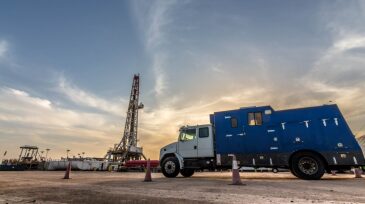
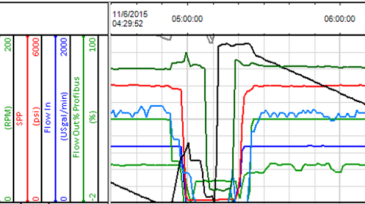
Exception-based monitoring of real-time data by remote operators can increase operational awareness of drilling crews, which can significantly minimize well-control risks by taking proactive and precise actions.
-
Safety barriers need to be implemented in an integrated and consistent manner in order to minimize risk, and technical, organizational, and operational aspects of the barriers need to be considered.
-
Some companies transporting certain petroleum-based products in British Columbia will have to comply with new spill preparedness and response requirements, after amendments made to the Environmental Management Act (EMA) came into force on 30 October.
-
A new study from Harvard identifies human capital metrics measured by global companies but determined many companies don’t disclose them on public reports.
-
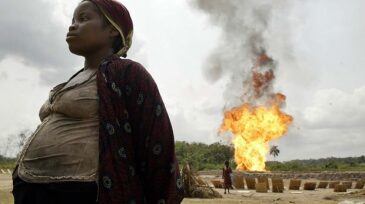
Babies in Nigeria are at double the risk of dying before they reach a month old if mothers lived near the scene of an oil spill before conceiving, study shows.
-
President Donald Trump's administration is considering revising parts of offshore drilling safety regulations intended to prevent the type of blowout that led to the 2010 Deepwater Horizon oil spill.
-
As operators seek improved but cost-effective approaches to major accident hazard management, the ability to collect, analyze, and make decisions on real-time data is emerging as a critical factor in identifying developing issues in the condition of assets and how they are operated.