Safety

Shell has demonstrated drone-in-a-box operations from its Mars floating production unit, becoming the first operator in the region to secure FAA approval for self-approved offshore beyond-visual-line-of-sight flights. JPT Senior Technology Editor Jennifer Pallanich visited Shell Technology Center Houston to see the system in action.

SPE’s newly renamed Safety Technical Section expands the reach of human factors by integrating safety, risk management, and system resilience expertise while preserving dedicated leadership and technical focus.

As drilling operations become increasingly digital, computer vision is emerging as a continuous safety layer that complements, not replaces, established safety practices. The challenge is no longer whether artificial intelligence can detect hazards, but how operators should deploy, integrate, and govern these systems to improve safety without adding operational comple…
-
 Proposed revisions to 2019 Well Control Rule aim to bolster safe and environmentally responsible energy operations.
 -
Many leaders commit to the aspiration of no harm to people, but they may need help on the substance and actions that will make a difference. The authors share their insights gained from decades of robust experience in safety culture and performance improvement and where it succeeds or fails.
-
"Our safety record is unacceptable, and improvements must be made," Kris Smith said.
-
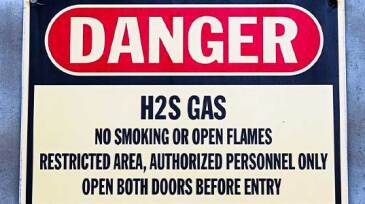
Given that hydrogen sulfide is such a risk to workers, care must be taken to protect and prevent exposure, particularly when working with lesser-known methods and in more dangerous settings, such as sour-gas fields and the sweetening process.
-
The paper provides an approach to mitigating the adverse effects of mercury found in production fields, including treatment-facility requirements and suitable technologies for production fields and onshore facilities.
-
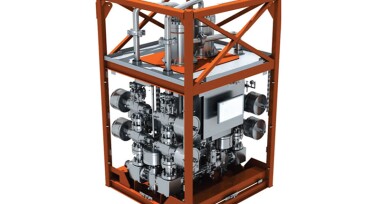
This paper highlights solids-management technologies that are currently available and still in use topside (some of which are potentially outdated).
-
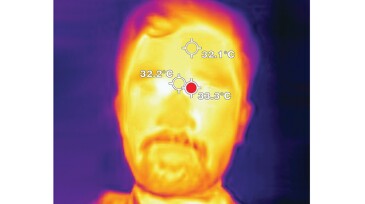
This paper explains how machine learning and physiology can be used to improve rig technical training by monitoring the operator’s stress, leading to targeted training to manage such situations better.
-
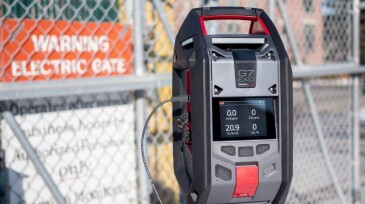
Connected safety is growing, including in the oil patch. And it is tied to the wearable technology so prevalent today.
-
A new funding opportunity is available for early-career researchers interested in safety and risk management issues related to offshore energy activities.
-
The two organizations recently signed a letter of cooperation. The agreement creates an opportunity to accelerate the practical application of human factors in the energy industry and create a bridge between energy industry professionals and human factors experts.