Safety

Shell has demonstrated drone-in-a-box operations from its Mars floating production unit, becoming the first operator in the region to secure FAA approval for self-approved offshore beyond-visual-line-of-sight flights. JPT Senior Technology Editor Jennifer Pallanich visited Shell Technology Center Houston to see the system in action.

SPE’s newly renamed Safety Technical Section expands the reach of human factors by integrating safety, risk management, and system resilience expertise while preserving dedicated leadership and technical focus.

As drilling operations become increasingly digital, computer vision is emerging as a continuous safety layer that complements, not replaces, established safety practices. The challenge is no longer whether artificial intelligence can detect hazards, but how operators should deploy, integrate, and govern these systems to improve safety without adding operational comple…
-
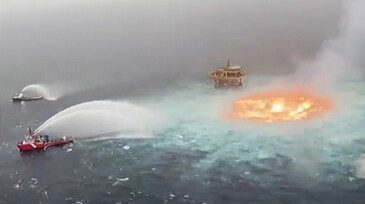
 Search for the missing workers continues as the Mexican state oil company investigates the cause of this latest blaze.
 -
A subsidiary-owned pipeline near Marmon, North Dakota, spilled more than 700,000 bbl of produced water over a period of almost 5 months in 2014–2015.
-
The complete paper provides tools useful for decision-makers to prevent adverse pipeline incidents caused by human action, poor facility performance, accidents, emergencies, and external events.
-
Delivering clear and consistent communication is a core component of crisis-response management. The complete paper describes an oilfield service company’s crisis-communication strategy implemented in response to a hurricane devastation of an area where more than 12,000 employees live and work.
-
Behavior-based programs have proven effective in reducing workplace incidents because safety becomes a collective responsibility shared by all employees. In the complete paper, the authors describe a program known as Human Performance.
-
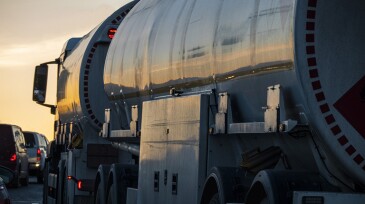
Poor health and safety behaviors pose a challenge to drivers of trucks and commercial vehicles and to the safety of motorists and pedestrians. In Nigeria, an operator partnered with medical personnel to demonstrate the positive effects of a human performance and care agenda on driver performance, engagement, behavior, and road safety.
-
At a time when the world is dealing with the COVID-19 virus, it is a safe assumption that we are frequently thinking about our health. This selection of technical papers highlights the topic as addressed at the 2020 SPE Virtual International Conference on Health, Safety, Environment, and Sustainability.
-
Remapping of conventional causes of accidents with human-factors guidelines highlighted consistent patterns in the causation of incidents where multiple human-factors criteria were formerly overlooked. This approach has led to changes in incident investigation, putting a focus on causes and providing efficient corrective actions to avoid the recurrence of incidents.
-
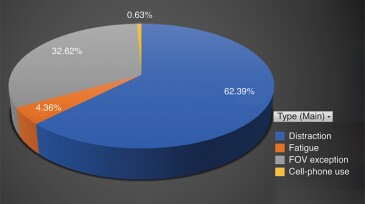
The authors’ objective is to understand further how technology can support the prevention of driver fatigue and to explore driver beliefs related to fatigue and the technology designed to assist in fatigue avoidance.
-
The swirling, sea-surface fire near the Ku-C platform was extinguished after several hours.