Safety

Shell has demonstrated drone-in-a-box operations from its Mars floating production unit, becoming the first operator in the region to secure FAA approval for self-approved offshore beyond-visual-line-of-sight flights. JPT Senior Technology Editor Jennifer Pallanich visited Shell Technology Center Houston to see the system in action.

SPE’s newly renamed Safety Technical Section expands the reach of human factors by integrating safety, risk management, and system resilience expertise while preserving dedicated leadership and technical focus.

As drilling operations become increasingly digital, computer vision is emerging as a continuous safety layer that complements, not replaces, established safety practices. The challenge is no longer whether artificial intelligence can detect hazards, but how operators should deploy, integrate, and govern these systems to improve safety without adding operational comple…
-
 Considering most of the rigs deal with human-machine interface systems, the role of human factors is at the heart of any successful operation. Eye-tracking technology can be useful in real-time operation centers where ocular movement data can improve the professionals’ performance.
 -
A survey of more than 100 leaders in hazardous industries suggests that oil price has had a moderate or significant effect on process safety risk, characterized by major job cuts, loss of corporate memory, cost-cutting, and overall belt-tightening brought on by the downturn.
-
Increasing evidence suggests that welding-fume exposure is associated with systemic inflammation.
-
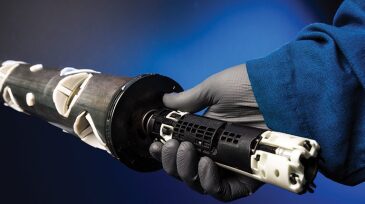
Accidental detonation of a perforating gun at surface can have catastrophic consequences. To decrease risks, layers of procedural controls have been implemented to reduce the inadvertent application of power caused by human error, stray voltage, or the presence of radio frequency (RF) energy.
-
The recently issued SPE technical report Getting to Zero and Beyond: The Path Forward highlights the “how to” for the industry to achieve zero incidents, zero harm, and zero impact.
-
DNV GL has published a paper to support the safe use of artificial intelligence. The paper asserts that data-driven models alone may not be sufficient to ensure safety and calls for a combination of data and causal models to mitigate risk.
-
Though many people understand that employers have workplace responsibilities regarding their employees' health and safety, far fewer understand that the employees also have certain legal obligations they must meet.
-
How can corporate trainers prepare employees for dangerous or extraordinary workplace scenarios? Virtual-reality technology offers immersive learning opportunities for an increasingly broad range of experiences.
-
The biggest problem is not in the everyday operation or use of tools or machinery, no matter how dangerous they may be. It’s when plans veer away from the day-to-day routine that’s the biggest problem.
-
Academic scientists and advocacy groups are urging the Environmental Protection Agency to withdraw and rewrite proposed guidelines for determining which scientific findings to use when evaluating the safety of toxic chemicals.