Safety

Shell has demonstrated drone-in-a-box operations from its Mars floating production unit, becoming the first operator in the region to secure FAA approval for self-approved offshore beyond-visual-line-of-sight flights. JPT Senior Technology Editor Jennifer Pallanich visited Shell Technology Center Houston to see the system in action.

SPE’s newly renamed Safety Technical Section expands the reach of human factors by integrating safety, risk management, and system resilience expertise while preserving dedicated leadership and technical focus.

As drilling operations become increasingly digital, computer vision is emerging as a continuous safety layer that complements, not replaces, established safety practices. The challenge is no longer whether artificial intelligence can detect hazards, but how operators should deploy, integrate, and govern these systems to improve safety without adding operational comple…
-
 ExxonMobil has traditionally used industry standards driven by the US Occupational Safety and Health Administration (OSHA) to classify safety events on the basis of the treatment or restrictions provided. However, this treatment-based approach has limitations.
 -
A metric based on a corrective-action-classification system initially appeared to be a valuable leading indicator for management purposes.
-
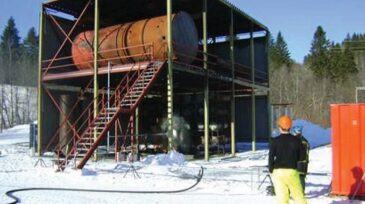
A series of 56 large-scale fire experiments in the range of 40–120 MW has been carried out in a generic offshore module.
-
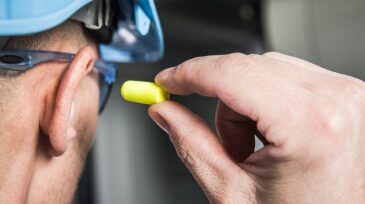
An epidemiological study was developed to take into account specific employee habits while measuring the possible prevalence of hearing problems arising from earlier occupational exposure.
-
Legislation, economics, and ethics are major drivers behind the adoption of engineering noise controls during offshore-facility design in Australia.
-
OTC recognized three figures who have contributed to facilities engineering: Dendy Sloan, Jim Brill, and Ken Arnold. They were recognized with the Distinguished Achievement Awards for their technical and leadership contributions to the industry.
-
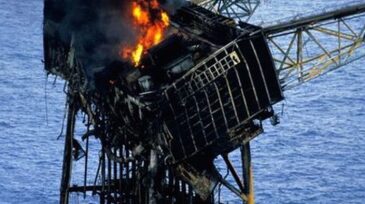
The energy contained in oil and gas makes them immensely useful—and dangerous. A fire fueled by hydrocarbons can quickly threaten anything exposed to it. Building in passive fire protection when constructing facilities is wise practice.
-
There is little doubt that the industry is committed to improving its safety performance—and most agree that improving the collective culture around safety is an effective approach to achieving this goal. But the specifics of how to achieve lasting change are more difficult.
-
SPE has formed a new technical section focusing on human factors engineering, which seeks to bring in knowledge from other industries, thereby ensuring safe operations and fostering a coordinated safety culture from top-level executives to workers on the ground.
-
Engineering culture is largely a safety culture. We have to assume that people will make a mistake and protect them from themselves through the way we design facilities.