Safety

This study ascertains the capital expenditure and operating expenditure associated with the reuse of existing facilities, specifically regarding a carbon capture and storage project being prepared in South Korea.

Sponsored
Advance your career with the new Pipeline Engineering Program at the Technical University of Leoben, a 5-month course combining on-campus and online learning, integrating industry expertise, engineering practice, and future-ready skills for professionals in oil, gas, and emerging energy systems.
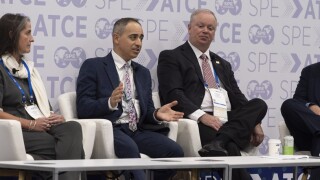
A resilience-based approach to safety was the focus of a panel of experts at the 2025 SPE Annual Technical Conference and Exhibition in Houston.
-
 The objective of these studies was to determine whether occupational exposure to gasoline engine emissions (GEE) increased the risk of lung cancer and, more specifically, whether leaded or unleaded GEE increased the risk.
 -
The Oklahoma Supreme Court on 23 January unanimously ruled that oil and natural gas companies can be sued when a worker is killed or injured on the job.
-
This paper details the operational effects of closed-loop drilling to demonstrate its ability to yield operational-process-safety improvements and cost savings over conventional methods.
-
SPE partnered with Baker Hughes, a GE company, in December to hold a session for sharing lessons learned regarding a significant safety incident during the dewatering phase of precommissioning a newly constructed, underwater pipeline.
-
A professor who the EPA charged with reviewing its 2016 study on hydraulic fracturing’s possible drinking water impacts shared her observations on the flawed process that led to the agency’s final conclusion.
-
A professor, whom the EPA charged with reviewing its 2016 study on hydraulic fracturing’s possible effects on drinking water, shared her observations on the process that led to the agency’s final conclusion.
-
A team of researchers from the University of Houston is working with the oil industry to develop new ways to predict when an offshore drilling rig is at risk for a potentially catastrophic accident.
-
This paper outlines a 2-year project undertaken in a major UK continental shelf field to ensure that the safety-critical systems of five 35-year-old installations were all compliant with the relevant industry regulatory standards.
-
This paper aims to provide a fresh perspective on the pivotal role of integrity leadership and the needed to deliver the journey to goal zero, no harm and no leaks.
-
The principle objective of this research, initiated by the Petroleum Safety Authority, has been to improve the knowledge of safety-relevant indicators in the petroleum industry, in particular related to validity, effectiveness, and reliability.