Safety

The SPE Human Factors Technical Section has been officially renamed the SPE Safety Technical Section. The new name better reflects how safety is managed today across interconnected areas like human performance, risk management, and system resilience.

The company said its frequency of serious incidents was down at the end of the year from its levels at the end of 2024.
This paper examines how real-time monitoring can improve both incident prevention and emergency response in the oil and gas industry. Drawing from real-world examples and case studies, it provides practical strategies for implementing this technology effectively.
-
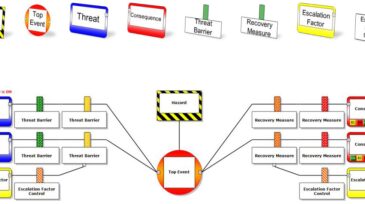
 This paper describes an approach to standardizing proactive incident investigation to failed or impaired barriers and risk management.
 -
One of the keys to growing a safety culture is to build levels of employee engagement. The reason for that is that the more engaged front-line employees are, the more ownership they assume for their work domain.
-
Between 2009 and 2016, SPE facilitated a series of global sessions to develop ideas for the future advancement of health, safety, and the environment in the industry. The result is the technical report “Getting to Zero and Beyond: The Path Forward.”
-
Hans Leo Hals, managing director for Trelleborg’s offshore operation based in Norway, met with leading oil and gas representatives in Mexico over a number of months to support improving the safety of Mexico’s offshore assets in the Gulf of Mexico.
-
Safety has always been a top concern for oil and gas suppliers. Because pipelines must operate 24 hours a day and 365 days a year, safety, high availability, and reliability are key requirements for smooth operations and, ultimately, profitability.
-
A recent report by a group of scientists at the University of St. Gallen in Switzerland found that children born within 10 km of an oil spill were twice as likely to die in their first month.
-
Southwest Research Institute has developed a leak detection system to autonomously monitor pipelines for hazardous chemical spills. R&D Magazine recently recognized the system as one of the 100 most significant innovations of 2017.
-
According to the National Institute for Occupational Safety and Health, which recently released a report on 2014 oil and gas fatalities, 18% of the 101 deaths for the year were the result of roadway vehicle accidents.
-
Safety barriers need to be implemented in an integrated and consistent manner in order to minimize risk, and technical, organizational, and operational aspects of the barriers need to be considered.
-
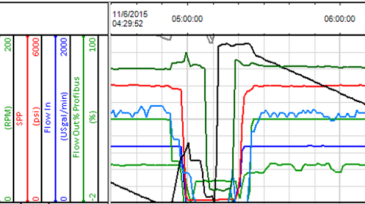
Exception-based monitoring of real-time data by remote operators can increase operational awareness of drilling crews, which can significantly minimize well-control risks by taking proactive and precise actions.