Safety

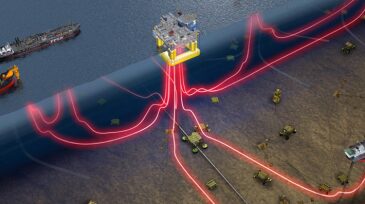
Shell has demonstrated drone-in-a-box operations from its Mars floating production unit, becoming the first operator in the region to secure FAA approval for self-approved offshore beyond-visual-line-of-sight flights. JPT Senior Technology Editor Jennifer Pallanich visited Shell Technology Center Houston to see the system in action.

SPE’s newly renamed Safety Technical Section expands the reach of human factors by integrating safety, risk management, and system resilience expertise while preserving dedicated leadership and technical focus.

As drilling operations become increasingly digital, computer vision is emerging as a continuous safety layer that complements, not replaces, established safety practices. The challenge is no longer whether artificial intelligence can detect hazards, but how operators should deploy, integrate, and govern these systems to improve safety without adding operational comple…
-
 Concern has been growing in the oil and gas industry about the high frequency of mooring line failures. While physical tension sensors can be difficult and costly to maintain, machine learning has shown to be a more-accurate and less-costly method for structural integrity assessment.
 -
A new package of regulations governing workers’ safety in the oil and gas sector in Guyana is being crafted, said the country's occupational safety and health consultant at the Ministry of Social Protection, Gwyneth King.
-
CIS has been awarded the President’s Award for Occupational Health and Safety from the UK’s Royal Society for the Prevention of Accidents.
-
Oil and gas performance specialist Salos has teamed up with a human behavior consultancy to reduce health and safety risks in the sector. The Aberdeen-based business has worked closely with HFB Consulting over the past year to create an aviation training plan tailored to the oil and gas industry.
-
The Petroleum Authority of Uganda, together with the Ministry of Health and the Uganda Health Federation, held a one-day conference to discuss health investment opportunities in the oil and the gas sector while highlighting the standards expected.
-
The practice of safety has a definite ethical component. Often, the most ethical actions to take are obvious, such as the choice between a legal action and an illegal one. Other times, there are many considerations that may cloud decision-making.
-
Recommended Practice 2001, Fire Protection in Refineries, includes important revisions on hazard analysis, new ways to improve the design of refineries to help prevent fires, and new information on managing the potential environmental impact of firefighting foams and marine firefighting.
-
In process industries, major accidents can result in numerous severe injuries or fatalities. This study reviews the broken human factors and barriers leading to these events and highlights key aspects of a technological-risk-assessment processes.
-
Local officials are calling on Massachusetts Gov. Charlie Baker to require studies of health and safety risks before approving new natural-gas infrastructure. In separate letters, boards of health representing 100 communities raise concerns about the state's reliance on natural gas as a fuel source.
-
About a third of claims for medical or sickness benefits are related to mental health issues, often resulting from stress. And with the oil sector downturn, mental health claims have increased, a director of an Aberdeen-based financial advisory firm said.