Safety

Shell has demonstrated drone-in-a-box operations from its Mars floating production unit, becoming the first operator in the region to secure FAA approval for self-approved offshore beyond-visual-line-of-sight flights. JPT Senior Technology Editor Jennifer Pallanich visited Shell Technology Center Houston to see the system in action.

SPE’s newly renamed Safety Technical Section expands the reach of human factors by integrating safety, risk management, and system resilience expertise while preserving dedicated leadership and technical focus.

As drilling operations become increasingly digital, computer vision is emerging as a continuous safety layer that complements, not replaces, established safety practices. The challenge is no longer whether artificial intelligence can detect hazards, but how operators should deploy, integrate, and govern these systems to improve safety without adding operational comple…
-
 The US Bureau of Safety and Environmental Enforcement’s SafeOCS program has released its 2017 annual report on Blowout Prevention System Safety, noting 18 of 25 operators associated with rig operations in the Gulf of Mexico reported 1,129 equipment component failure events.
 -
Last year, according to reports filed by 45 IOGP member companies, the fatal accident rate associated with global upstream operations fell by 36% from the previous year. While the number of fatalities was down, the number of fatal incidents increased from 29 in 2016 to 30 in 2017.
-
Just as Libya resumes oil exports from recently shuttered ports, an attack on its largest field is setting back progress yet again.
-
The Mental Health Commission of Canada explains the effect of employees’ daily experience on mental health in new white paper.
-
In 2015 and 2016, the Health and Safety Working Group of the North Sea Offshore Authorities Forum discussed common challenges for the oil and gas industry. The challenges related to maintaining and operating aging installations in a low-oil-price environment was selected as a topic for further work.
-
SPE is presenting a workshop to further understanding of HSE in drilling operations and sharpen knowledge of industry best practices.
-
With the intended outcome of providing and improving a safe and healthy workplace for workers and persons under an organisation’s control, ISO 45001 provides a structured framework for managing the prevention of work-related injury and ill health.
-
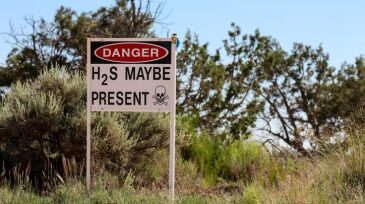
Although improvements to drilling rigs have allowed drilling to depths greater than 20,000 ft, experience has shown that, the deeper the well, the higher the bottomhole pressure and more hydrogen sulfide gases the lease workers will experience.
-
Although carpal tunnel syndrome is a strong driver of workers' compensation costs, lost wages, lost productivity, and disability, there is still a limited understanding of its frequency and causes in working populations.
-
Poor psychosocial working conditions increase the likelihood of various types of morbidity and may substantially limit quality of life and possibilities to remain in paid work.