SPE News

Each year during its Annual Technical Conference and Exhibition (ATCE), SPE honors members whose outstanding contributions to the Society and the petroleum industry merit special distinction. Recipients will be recognized at the Annual Awards Banquet on 22 October.

Get more from ATCE 2026 with a strategic plan for learning, networking, technology scouting, and career growth. Susan Howes shares how to maximize the value of SPE's premier annual event.

After years of market shocks, technological breakthroughs, and rising uncertainty, ATCE 2026 will provide new insights on how industry leaders and technical experts are preparing for the next era of the upstream business.
-
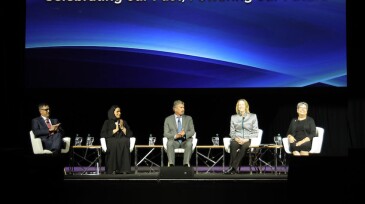
 Collaboration and technology will help the industry meet its toughest challenges, experts said during the opening session at ATCE.
 -
Congratulations to the TWA Energy Influencers! These outstanding young professionals are being celebrated for their work discovering, innovating, and sharing their knowledge, positively influencing and inspiring others.
-
The SPE 2024 Annual Report is now live, highlighting SPE’s journey to creating our energy future. Milestones include an overall 7% increase in membership. Notably, student membership has also grown, marking the first increase in this category since 2015.
-
This paper presents a novel modeling framework for predicting residual oil saturation in carbonate rocks. The proposed framework uses supervised machine learning models trained on data generated by pore-scale simulations and aims to supplement conventional coreflooding tests or serve as a tool for rapid residual oil saturation evaluation of a reservoir.
-
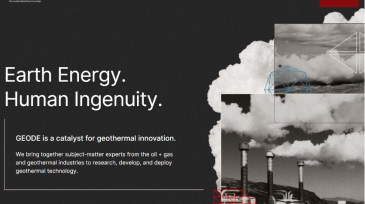
The DOE-sponsored program brings together more than 100 entities from the geothermal and oil and gas sectors to build the future of cross-industry collaboration.
-
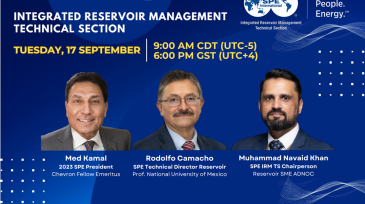
Join us on 17 September for the virtual launch event of the new SPE Integrated Reservoir Management Technical Section.
-
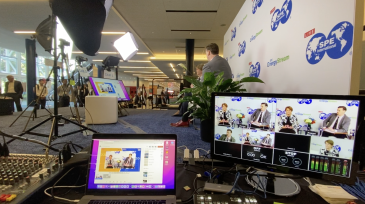
SPE is excited to livestream these thought-provoking and informative Tech Talks from the SPE Energy Stream studio at the SPE Annual Technology Conference and Exhibition, 23–25 September, in New Orleans.
-
Each year during its Annual Technical Conference and Exhibition (ATCE), SPE honors members whose outstanding contributions to SPE and the petroleum industry merit special distinction. Recipients will be recognized at the Annual Awards Banquet on Tuesday, 24 September.
-
In this inaugural episode of his vodcast and column, 2025 SPE President Olivier Houzé shares his insights on the challenges facing our Society and its members, as well as his vision for his presidency.
-
As SPE celebrates a century of innovation at the 2024 ATCE, we also mark the 75th anniversary of the Journal of Petroleum Technology. These twin milestones stand as a testament to the achievements that have driven our industry forward—innovation, pushing boundaries, setting new standards, and fueling the energy that powers the world.