SPE News

This section lists with regret SPE members who recently passed away.

Each year during its Annual Technical Conference and Exhibition (ATCE), SPE honors members whose outstanding contributions to the Society and the petroleum industry merit special distinction. Recipients will be recognized at the Annual Awards Banquet on 22 October.

Get more from ATCE 2026 with a strategic plan for learning, networking, technology scouting, and career growth. Susan Howes shares how to maximize the value of SPE's premier annual event.
-
 A special Legends of Artificial Lift Luncheon on 20 August at the SPE Artificial Lift Conference and Exhibition celebrated six individuals for their outstanding contributions to the technical knowledge in this field: Ali Hernandez, Louis Ray, Francisco Alhanati, James Hall, Lawrence Camilleri, and Toby Pugh.
 -
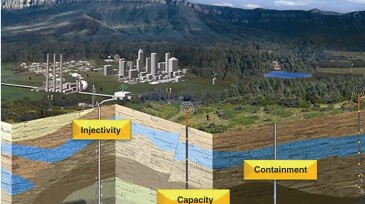
The SPE CO2 Storage Resources Committee has opened a period for public comments on an update to the current 2017 SRMS.
-
In 1980, he became a member of the SPE Century Club, an honor bestowed upon members who recruit more than 100 new members.
-
This section lists with regret SPE members who recently passed away.
-
Twenty SPE sections have been selected for recognition.
-
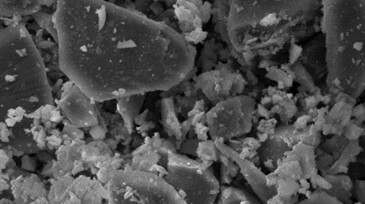
his paper presents research and application of a sustainable, low-density geopolymer alternative to Portland cement for cementing applications in low-temperature wells.
-
In August, SPE’s parent organization, The American Institute of Mining, Metallurgical, and Petroleum Engineers (AIME), will make its yearly changes to its eight-member Board of Trustees.
-
The Integrated Reservoir Management Technical Section is committed to unite a community of technical professionals and academia driven to enhance reservoir performance by harnessing technological innovations and creating a collaborative space for strategic discussions and sustainable practices.
-
These awards recognize those members who have contributed exceptional service and leadership to the Society, as well as those who have made major professional contributions to their technical disciplines at the regional level.
-
Fundamental research conducted to derive a transport model for ideal and partitioning tracers in porous media with two-phase flow that will allow fast and efficient characterization and selection of the correct tracer to be used in field applications.