Offshore/subsea systems

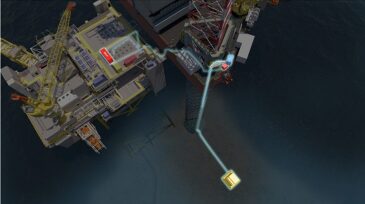
Shell has demonstrated drone-in-a-box operations from its Mars floating production unit, becoming the first operator in the region to secure FAA approval for self-approved offshore beyond-visual-line-of-sight flights. JPT Senior Technology Editor Jennifer Pallanich visited Shell Technology Center Houston to see the system in action.

This paper explores the application of a modular, high-temperature gas-cooled nuclear reactor to a Very Large Crude Carrier-class floating production, storage, and offloading vessel.

This paper describes the potential of combined-cycle technology (use of a gas turbine and a steam turbine together to turn fuel into electricity) in offshore carbon-capture applications.
-
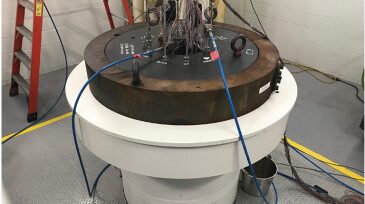
 The complete paper presents a practical approach for validating design-verification analysis for subsea equipment, using a representative pressure valve block to correlate finite-element analysis (FEA) predictions for strain changes with actual measured changes.
 -
This paper identifies potentially significant hidden value of subsea multiphase boosting technology, or aspects of it that have not received adequate attention during the field-development decision-making process.
-
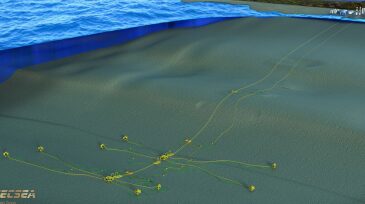
The Dalmatian project is a brownfield development and represents the world’s longest multiphase tieback by boosting at some 35 km; the boosting system is installed at approximately 6,000 ft water depth.
-
The motto of the Olympic Games is “Citius, Altius, Fortius,” Latin for “faster, higher, stronger,” which emphasizes the concept of pushing the limits. As an engineer, that approach really speaks to me—and offshore installations, and especially offshore tiebacks, illustrate that concept very well.
-
Eni conducted a research project to explore the maturity of new technologies to enable economical development of deepwater prospects with tieback distances longer than 50 km and 150 km, respectively, for oil and gas fields.
-
This case study describes how gas condensates within a subsea tieback system behave very differently to condensed water from a wet-gas system and therefore a pseudo dry-gas system needs to be configured differently for gas-condensate developments.
-
A subsea water-treatment system designed to leverage space availability, steady temperatures, lower bacteria levels, and other natural benefits of the seabed environment was successfully installed during pilot testing at the Ekofisk field offshore Norway.
-
Aimed at streamlining manufacturing processes and significantly reducing costs, the practice provides standardized operator requirements that DNV GL says will ensure consistency in the fabrication of subsea pressure retaining equipment such as wellheads, manifolds, and jumpers.
-
Bloomberg reports that Saipem is seeking to bulk up and weather an industry downturn. A potential deal could create an oilfield service giant with more than $12.4 billion in revenue.
-
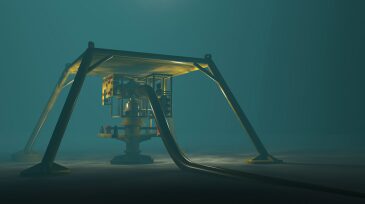
Before the dream of a “subsea factory” can come true, a group of North Sea companies will need to see if the required technology is economically feasible to build.