Offshore/subsea systems

Shell has demonstrated drone-in-a-box operations from its Mars floating production unit, becoming the first operator in the region to secure FAA approval for self-approved offshore beyond-visual-line-of-sight flights. JPT Senior Technology Editor Jennifer Pallanich visited Shell Technology Center Houston to see the system in action.

This paper explores the application of a modular, high-temperature gas-cooled nuclear reactor to a Very Large Crude Carrier-class floating production, storage, and offloading vessel.

This paper describes the potential of combined-cycle technology (use of a gas turbine and a steam turbine together to turn fuel into electricity) in offshore carbon-capture applications.
-
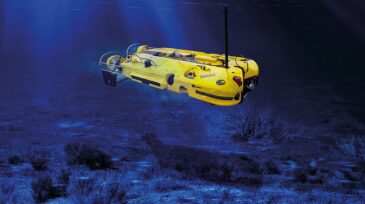
 WiSub will lead a consortium with Statoil, Kongsberg, Saab, and other companies and universities to develop a standardized interface for AUV docking with subsea structures, as well as bi-directional power transfer to help charge sensor networks.
 -
Emphasis on identifying more-efficient subsea boosting solutions has led to a number of initiatives in the industry.
-
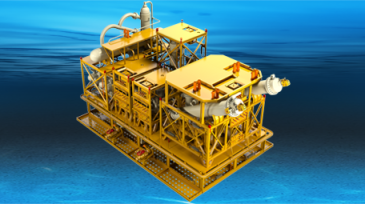
This study examines how subsea processing (SSP) can develop into an important enabling technology for future ultradeepwater-field developments and long-distance tiebacks.
-
The costs of subsea boosting systems have been reduced by adopting three primary strategies: simplifying the system design to reduce weight and cost, simplifying the installation and intervention, and reducing complexity and risk.
-
As the design methodologies evolve for arctic pipelines, strudel scour, permafrost thaw settlement, and ice gouging need to be factored in with environmental and geotechnical data, limit states, and trenching and backfilling activities.
-
The expanded research and testing capabilities offer the only vertical test rig for subsea safety valves and one of the largest high-pressure natural gas test facilities in the world.
-
Operators are increasingly using existing offshore infrastructure for asset life extension, and developing new marginal stranded fields rather than develop new large greenfields. Subsea processing is an enabling technology in this goal.
-
Southwest Research Institute is adding a new facility to its capabilities in testing and evaluating subsea equipment and systems.
-
Innovations characterize the deepwater Moho Nord field development, recently brought on stream by Total in the Republic of Congo, and the project creates significant value for the country.
-
Results of the experimental and numerical heat-transfer analysis conducted on a T-shaped acrylic-glass pipe, representing a production header in a subsea production system with a vertical deadleg.