Offshore/subsea systems

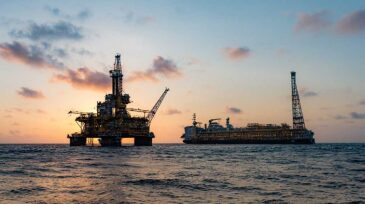
Production has begun at the company’s fifth FPSO-based development offshore Guyana just days after it sanctioned what will become its eighth project in the prolific Stabroek Block.

New rules requiring Mozambique’s LNG industry to supply 25% of production to the domestic market could stabilize gas deliveries to South Africa’s Secunda industrial center as the Pande and Temane gas fields near depletion.

Industry forecasts point to increasing upstream expenditure and production, even as geopolitical volatility and smaller discoveries challenge project economics.
-
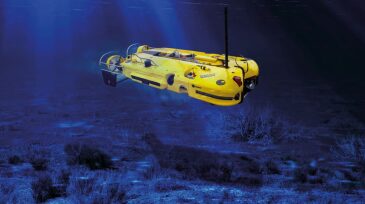
 WiSub will lead a consortium with Statoil, Kongsberg, Saab, and other companies and universities to develop a standardized interface for AUV docking with subsea structures, as well as bi-directional power transfer to help charge sensor networks.
-
Emphasis on identifying more-efficient subsea boosting solutions has led to a number of initiatives in the industry.
-
This study examines how subsea processing (SSP) can develop into an important enabling technology for future ultradeepwater-field developments and long-distance tiebacks.
-
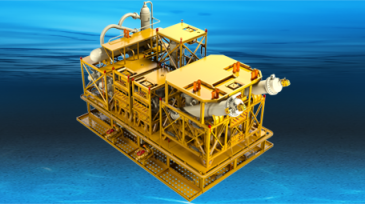
The costs of subsea boosting systems have been reduced by adopting three primary strategies: simplifying the system design to reduce weight and cost, simplifying the installation and intervention, and reducing complexity and risk.
-
As the design methodologies evolve for arctic pipelines, strudel scour, permafrost thaw settlement, and ice gouging need to be factored in with environmental and geotechnical data, limit states, and trenching and backfilling activities.
-
The expanded research and testing capabilities offer the only vertical test rig for subsea safety valves and one of the largest high-pressure natural gas test facilities in the world.
-
Operators are increasingly using existing offshore infrastructure for asset life extension, and developing new marginal stranded fields rather than develop new large greenfields. Subsea processing is an enabling technology in this goal.
-
Southwest Research Institute is adding a new facility to its capabilities in testing and evaluating subsea equipment and systems.
-
Innovations characterize the deepwater Moho Nord field development, recently brought on stream by Total in the Republic of Congo, and the project creates significant value for the country.
-
Results of the experimental and numerical heat-transfer analysis conducted on a T-shaped acrylic-glass pipe, representing a production header in a subsea production system with a vertical deadleg.