Offshore/subsea systems

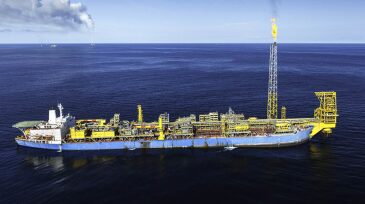
This paper explores the application of a modular, high-temperature gas-cooled nuclear reactor to a Very Large Crude Carrier-class floating production, storage, and offloading vessel.

This paper describes the potential of combined-cycle technology (use of a gas turbine and a steam turbine together to turn fuel into electricity) in offshore carbon-capture applications.

This paper uses the structural-integrity-management framework to evaluate the current structural integrity of chosen platforms, highlighting their potential and limitations for carbon capture, use, and storage purposes based on in-service assessments.
-
 A new tool enables variable bore rams and shear rams to be tested in one run, cutting rig time significantly.
 -
Developing a well-specific subsea-capping contingency plan involves assessing the feasibility of deploying a capping stack from a floating vessel, determining the weight and stability, and performing dynamic-flow simulations of closing the capping stack outlets.
-
Subsea tieback of a new field to an existing offshore production facility is one option to minimize development costs.
-
This paper presents the development of Sapinhoá field, covering the fast-track transition and decision-making process, from appraisal to conceptual and basic engineering of the Sapinhoá pilot project and on to its subsequent execution, highlighting the challenges, lessons learned, and results.
-
Subsea processing is an evolving technology in ultradeepwater development and has the potential to unlock a significant amount of hydrocarbon resources. In this paper, the authors have reviewed the application of subsea systems in 12 deepwater fields and discussed the significance of each.
-
Intervention and workover operations can significantly affect the structural integrity and fatigue life of subsea-wellhead systems. Methodologies for wellhead-fatigue analysis have improved, but have yet to account for thermal effects along the well. This study analyzes those thermal effects.
-
Successful rejuvenation of two declining fields was enabled through innovation in both engineering and procurement strategy.
-
The deepwater industry uses technology qualification (TQ) as a tool to determine which safety barriers are needed, and what level of testing is required. Even without failure data from the field, a method has been developed to quantify the integrity of various components.
-
The sharp downturn in the offshore oil business has sparked interest in using subsea pumps to add production. If those conversations turn into orders, it may convert this rarely used option into a commonly used tool for extending the life of offshore fields.
-
A new blowout preventer design shows potential for delivering much greater shearing power than current BOPs. The design is simpler and more efficient than current BOPs.