Offshore/subsea systems

New rules requiring Mozambique’s LNG industry to supply 25% of production to the domestic market could stabilize gas deliveries to South Africa’s Secunda industrial center as the Pande and Temane gas fields near depletion.

Industry forecasts point to increasing upstream expenditure and production, even as geopolitical volatility and smaller discoveries challenge project economics.

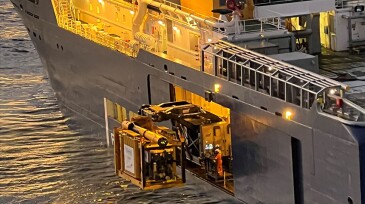
How OSRL, InterMoor, and Oceaneering adapted existing technologies into a method for landing a capping stack on a shallow-water well.
-
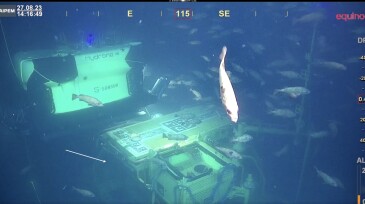
 With the right infrastructure and interoperability, subsea resident robotics could unlock more frequent, cost-effective inspections—and a new standard for offshore efficiency.
-
Emerging solutions could solve current subsea pain points, while a new taxonomy system could clarify the capabilities of the expanding domain of underwater vehicles.
-
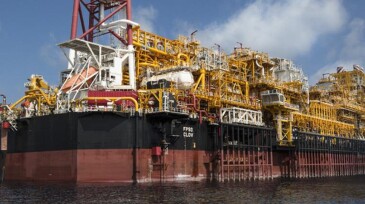
The Begonia and CLOV Phase 3 subsea tiebacks are each sending production to nearby FPSOs.
-
Shell became the first international company to operate producing fields offshore Brazil and the first to navigate the country’s complex and detailed decommissioning permitting process, which involved extensive environmental assessments, regulatory approvals, and coordinated stakeholder engagement.
-
North Sea tieback to the Troll C platform could begin production by the end of 2029.
-
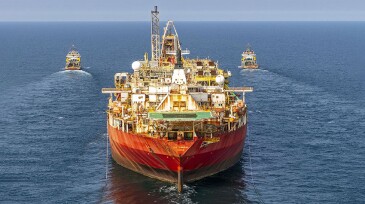
The field, which holds the first production license on the Norwegian Continental Shelf, sent oil to the Jotun FPSO on 23 June.
-
Less than 3 months after going onstream, the Barents Sea project, the northernmost production offshore Norway, is producing 220,000 B/D.
-
The company has installed an autonomous drone system on Aker BP’s Edvard Grieg platform in the North Sea, enabling frequent, remote inspections from shore.
-
Once labeled “undrillable,” Brazil’s heavy-oil Atlanta field in the Santos Basin faced technical, financial, and logistical challenges. But through a phased approach, clever reuse of assets, and disciplined project execution, Brava Energia transformed a risky deepwater asset into a producing field with 172 million BOE in 2P reserves.
-
This paper describes the use of coiled tubing in a pilot project for carbon dioxide injection, enabling evaluation of the conversion of an existing oil field for CCS purposes and derisking storage-development uncertainties before having to cease hydrocarbon production.