Sustainability

The startup company’s Midland Basin demonstration plant, located in the Permian Basin, takes a major step toward commercialization by proving its direct lithium extraction technology can refine battery-grade lithium carbonate from produced water under multiple 24/7 production cycles.

This paper explores the application of a modular, high-temperature gas-cooled nuclear reactor to a Very Large Crude Carrier-class floating production, storage, and offloading vessel.

This paper describes the potential of combined-cycle technology (use of a gas turbine and a steam turbine together to turn fuel into electricity) in offshore carbon-capture applications.
-
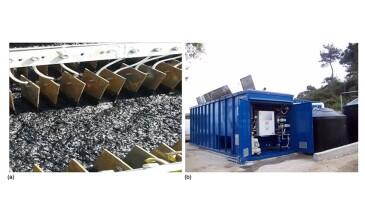
 The paper aims to address the challenges and opportunities in managing produced water and its contaminants in the petroleum industry.
 -
This paper describes the development of guidelines to determine the most suitable corrosion-resistant alloys for downhole injection equipment in wells for carbon capture and storage and carbon capture, use, and storage.
-
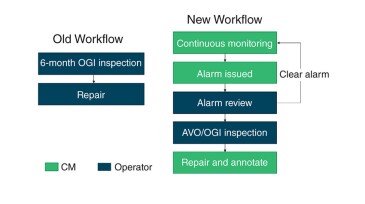
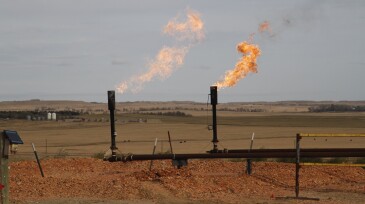
This paper examines how data-science-driven work practices can result in substantial reductions in methane emissions compared with other leak-detection and -repair methods.
-
This paper examines the economics of carbon capture, usage, and storage projects, either standalone or in conjunction with large offshore gas projects, in Denmark, Indonesia, and Australia.
-
DNV has certified the feasibility of ADNOC’s West Aquifer carbon dioxide storage site in the UAE, marking a significant milestone in the Middle East’s carbon capture and storage efforts.
-
The partnership between GLJ and Energy Fuse Group aims to leverage the expertise of both companies in project management, operational design, and subsurface and commercial evaluations to facilitate effective CO2 storage solutions.
-
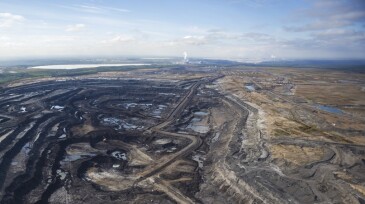
Absolute Greenhouse Gas Emissions From Canadian Oil Sands Near Flat in 2023, Even as Production GrewAnalysis by S&P shows that the annual growth in absolute emissions was less than 1% for the third consecutive year.
-
As the initiative expands to include Oil India Limited, PetroChina, and Vår Energi, it identifies a need for standardized methodologies to enhance data quality and consistency.
-
The report details the company’s actions to reduce methane emissions across its operations.
-
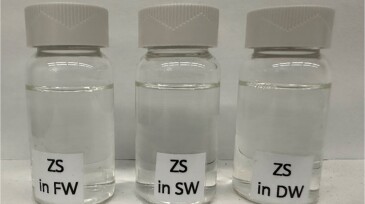
This study explores the potential of locally produced surfactants for enhanced oil recovery in high-temperature and high-salinity reservoir environments.