Sustainability

SPE's new Asset Integrity Technical Section brings together industry experts to advance best practices in reliability engineering, asset integrity, risk reduction, and infrastructure performance. The global community will focus on the safe, reliable, and sustainable operation of energy assets across both traditional and emerging energy sectors.

SPE Journal is seeking submissions for a special issue on sustainable enhanced oil recovery (EOR), highlighting innovations that boost oil recovery while reducing CO2 emissions and environmental impact. The Call for Papers opens on 15 October 2026.

This paper presents a flexible, highly cost- and energy-efficient method of gas separation and CO₂ capture from many different gas mixtures with a large range of CO₂ concentrations.
-
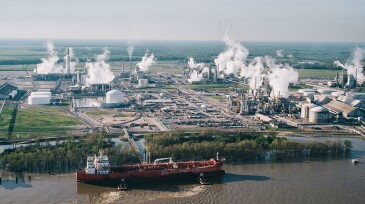
 At the center of a rush to build carbon storage is the state of Louisiana, where the number of applications to build long-term storage is equal to half the sites operating globally.
-
A new 1.0 Bcf/D facility in Baytown, Texas, is expected online no later than 2028.
-
Spending on low-carbon projects will increase by $60 billion this year, 10% higher than 2022, led by wind developments but helped by a significant rise in funding for hydrogen and carbon capture, utilization and storage infrastructure, Rystad Energy research shows.
-
Although 2022 did not match 2021’s record of over 19.5 GW of online capacity, 2022 witnessed the second highest amount of global online capacity with almost 8.5 GW. Final investment decisions (FIDs) were taken on over 11.5 GW of projects, making it the fourth highest year for FIDs.
-
The past year has been a challenging one for companies on the ESG front. Overlapping environmental, social, and political crises—from flooding and wildfires to the first war in Europe in 80 years—have made the jobs of leaders that much harder.
-
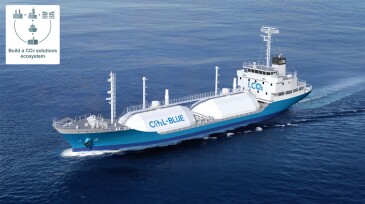
The sites with the most CO2 emissions to capture are often far from the best rock to sequester it, leading to design projects for transport ships.
-
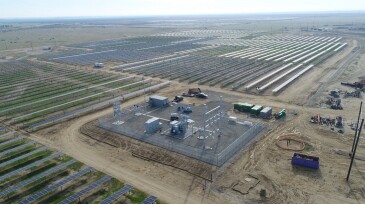
This paper outlines one of the first efforts by a major oil and gas company to build a net exporting, behind-the-meter solar photovoltaic plant to lower the operating costs and carbon intensity of a large, mature oil and gas field.
-
The two companies said they will work together to try to find the best places to develop geothermal energy and advance the necessary technologies to commercial scale.
-
Leveraging its existing natural gas interests, plus renewables potential in Egypt and Mauritania, BP is now factoring in Africa to realize its global ambitions as a hydrogen producer.
-
The Oil and Gas Climate Initiative says its members’ absolute upstream methane emissions were down 40% since 2017. That’s equivalent to taking more than 3 million cars off the road for a year.