Floating production systems

Argentina’s President Javier Milei met with TotalEnergies CEO Patrick Pouyanné and Eni CEO Claudio Descalzi in Paris to discuss Argentina’s energy sector, including projects linked to the Vaca Muerta shale formation and the development of the Argentina LNG export project.

With confidence in subsea boosting performance growing, BP is incorporating pumping systems into both greenfield developments and brownfield expansions.
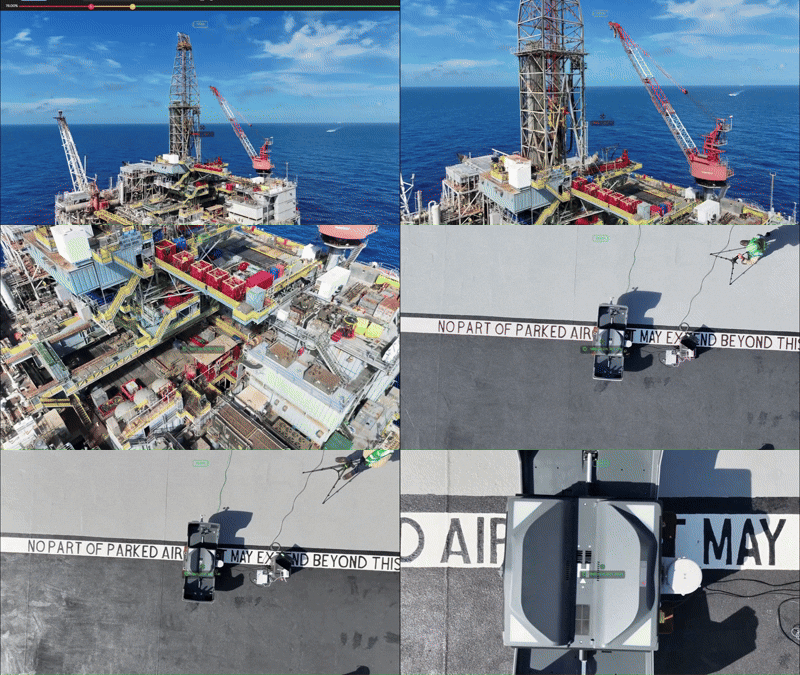
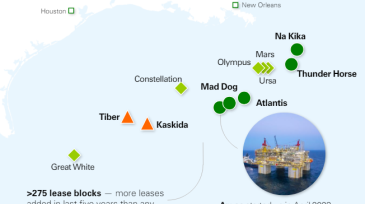
Shell has demonstrated drone-in-a-box operations from its Mars floating production unit, becoming the first operator in the region to secure FAA approval for self-approved offshore beyond-visual-line-of-sight flights. JPT Senior Technology Editor Jennifer Pallanich visited Shell Technology Center Houston to see the system in action.
-
 Both new and old vessels are benefiting from automation processes that can improve operational efficiency, predict downtime, and debottleneck workflows using a flurry of crucial data points.
-
A newbuild Fast4Ward hull will be used as part of the Block 58 development set for FID prior to year-end.
-
The deepwater Gulf of Mexico project in the Paleogene will require a 20K-psi production semisubmersible.
-
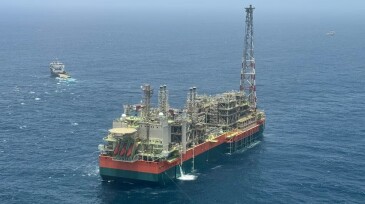
Mooring operations underway following arrival of the GTA FPSO on-site at the maritime border of Mauritania and Senegal.
-
The massive vessel moved from Aker Solutions quayside to begin sea trials ahead of deployment in the Barents Sea prior to year-end.
-
The set of new-generation FPSOs will be delivered in 2029 equipped with technologies that can cut greenhouse emissions by 30% given the unit’s all-electric configuration.
-
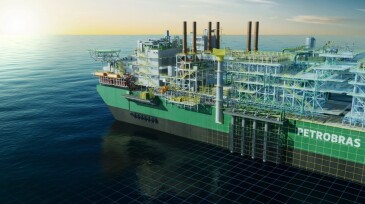
At the 2024 Offshore Technology Conference, industry giants like ExxonMobil, Equinor, and Petrobras offered a look at the future of low-carbon floating production, storage, and offloading units.
-
Enhancement to the drillship comes ahead of work commitment on Shell's Sparta development in the US Gulf of Mexico, its first in the Gulf to produce from 20K reservoirs.
-
The largest project to date will add a capacity of 250,000 B/D starting in 2025.
-
The Libra Consortium, led by Brazil’s Petrobras, has developed a method of separating carbon dioxide from reservoir fluids at the seafloor rather than the FPSO topsides.