Unconventional/complex reservoirs

This paper aims to establish a set of best practices for generating particle-size-distribution data from core samples.

This paper discusses the successful execution of two openhole gravel-pack completions in two Gulf of Mexico fields with depleted reservoirs.

By integrating experimental and mathematical modeling approaches, this work aims to advance the understanding of sand-detachment dynamics and formation instability under varying saturation conditions.
-
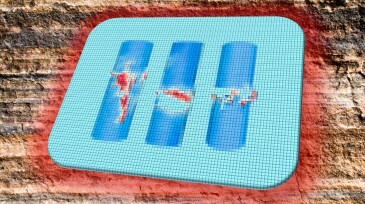
 Shale producers have learned in recent years that their fracture plugs may not be holding up as well as they thought. One of the first operators to realize the true scope of the issue is now sharing the pathway it took to solving it.
 -
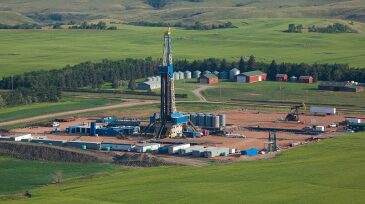
Success at the Fuling gas field in southwestern China will play a major role in the country's energy agenda.
-
The acquisition adds 2 or 3 years to Enerplus Corporation's development inventory, it said of the cash deal that follows its purchase of Bruin E&P earlier this year.
-
A look behind-the-scenes reveals what it takes to protect innovative ideas in the fast-moving US shale sector—key lessons learned, pitfalls to avoid, and how to do it the right way, as told by two of the operator's intellectual property (IP) protection leaders.
-
The supermajor would be the second to conduct a hydraulic fracturing pilot project in the country.
-
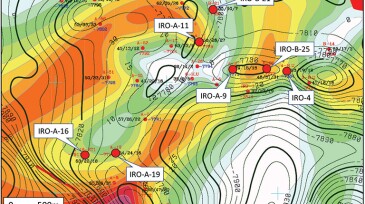
The water-shutoff technique is used in some wells of the U reservoir in the Iro field of the Oriente Basin in Ecuador to restore production after an early water breakthrough. This paper compares the production historical data, workovers, and sand-body correlation of wells to understand reservoir behavior, shale-baffle-sealing continuity, the existence of different san…
-
The authors demonstrate that alternating injection of polymer and water is effective and economical for heavy oil fields, even offshore.
-
A pilot project validates the use of an advanced polymerflooding technology on the Alaska North Slope.
-
This paper outlines an approach to history matching that uses artificial intelligence with an artificial neural network and data-driven analytics. The approach has been used to mitigate history-matching challenges in a mature, highly geologically complex field offshore Malaysia.
-
A study of a field case concludes that well spacing can be optimized by combing the information extracted from uncertainty and the interpolated maximum net present value.