Unconventional/complex reservoirs

This work applies fuzzy logic, a well-established artificial-intelligence technique, to quantitatively assess connectivity between injectors and producers in a giant presalt field in the Santos Basin of Brazil.

Disposal wells remain the lowest-cost solution for produced water, but concerns over seismicity and long-term sustainability are accelerating interest in alternatives.

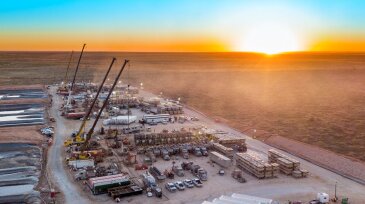
With a strong presence across US shale in the Bakken, Anadarko Basin, Powder River Basin, and the Permian, Continental Resources is expanding into Argentina’s Vaca Muerta shale as the privately held E&P giant pursues international growth.
-
 DJ Basin player enters the Permian Basin with a pair of asset purchases from private-equity vehicles.
 -
The US-based drilling contractor and well completions company will combine to form the second-biggest service company in North America.
-
A concurrent deal to sell off some of the acquired assets to Northern Oil and Gas will effectively lower the acquisition cost to $1 billion.
-
A Kimmeridge Energy executive said at the Unconventional Resources Technology Conference that he wants to "make unconventional resources investable in a low-carbon world."
-
A slate of new pipeline projects are expected to help relieve the oil-rich region's associated gas bottleneck.
-
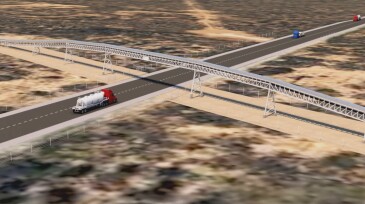
The first long-haul overland conveyor system to deliver proppant is under construction in the Permian Basin.
-
Enverus claims hundreds of millions of barrels of gas condensates are nowhere to be found in public data due to a major reporting gap.
-
A dissolvable collet field tested in an unconventional completion led to an average running time of 32 minutes per stage in a vertical section and 19 minutes per stage in the horizontal section.
-
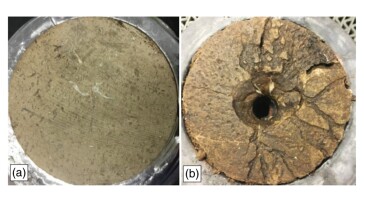
This paper describes the analysis of actual performance data for acid fracturing in a tight carbonate formation to investigate the ineffectiveness of the process.
-
The authors of this paper describe an underbalanced coiled-tubing drilling campaign in the operator’s onshore fields using a closed-loop system design.