Unconventional/complex reservoirs

This study investigates the potential for in-situ hydrogen generation from hydrocarbons using in-situ combustion, with particular emphasis on the role of kerogen content and heating mode.

This paper presents the application of degradable particulate-diverter technology to improve oil production by effectively diverting stimulation treatment fluids away from high-water-cut, high-permeability, high-temperature producing intervals or zones.

This paper presents the methodology for developing drill-in organophilic clay-free invert-emulsion-fluid technology that enhances well production through fundamental geological studies and fluid testing.
-
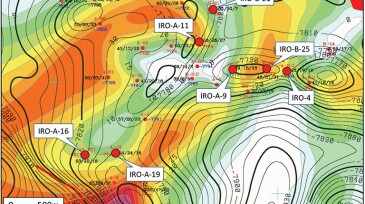
 The water-shutoff technique is used in some wells of the U reservoir in the Iro field of the Oriente Basin in Ecuador to restore production after an early water breakthrough. This paper compares the production historical data, workovers, and sand-body correlation of wells to understand reservoir behavior, shale-baffle-sealing continuity, the existence of different san…
-
The authors demonstrate that alternating injection of polymer and water is effective and economical for heavy oil fields, even offshore.
-
A pilot project validates the use of an advanced polymerflooding technology on the Alaska North Slope.
-
This paper outlines an approach to history matching that uses artificial intelligence with an artificial neural network and data-driven analytics. The approach has been used to mitigate history-matching challenges in a mature, highly geologically complex field offshore Malaysia.
-
A study of a field case concludes that well spacing can be optimized by combing the information extracted from uncertainty and the interpolated maximum net present value.
-
Oil prices are up and so is the outlook for companies at the heart of the US unconventional oil sector, but they still have their concerns.
-
The Norwegian oil company is exiting assets in North Dakota and Montana after a decade of development. A Houston-based private equity producer will take over the shale fields.
-
Russia’s Gazprom Neft Technologies is partnering with France’s SNF, the world’s largest maker of polyacrylamide, a polymer widely used in Chemical EOR. They aim to develop demand for chemical flooding technologies throughout Siberia.
-
The two-well stimulation approach is delivering big savings to first adopters. A new report from Rystad highlights how the development is taking shape.
-
In striving to boost production of shale gas and tight oil, China is trying enhanced-hydraulic-fracturing technology and real-time data analysis in the Sichuan shale basin. In Daqing’s tight-oil fields, an alternative fracture-completion strategy and post-stimulation flowback technology has been tested.