Unconventional/complex reservoirs

This study investigates the potential for in-situ hydrogen generation from hydrocarbons using in-situ combustion, with particular emphasis on the role of kerogen content and heating mode.

This paper presents the application of degradable particulate-diverter technology to improve oil production by effectively diverting stimulation treatment fluids away from high-water-cut, high-permeability, high-temperature producing intervals or zones.

This study presents applications involving the use of calcium carbonate particles for conformance improvement for CO2 water-alternating-gas injection in the operator’s Permian enhanced-oil-recovery projects.
-
 Europe and Australia have joined the US in expanding recoverable hydrocarbons from unconventional resources, and initial activities are on the rise elsewhere.
-
Tight reservoirs are still in the early stages of becoming a dominant source of energy and economic growth throughout the world for years to come. I recently read two distinctly different articles particularly relevant to tight reservoirs.
-
A multidisciplinary approach integrates fracture characteristics, reservoir production, and stress-field evolution to design and optimize the development of unconventional assets.
-
This paper sheds light on the nonlinear physics involved in the production of shale-gas reservoirs by improving the understanding of the complex relation between gas production, reservoir properties, and several treatment-design parameters.
-
Gas in tight sand and shale exists in underground reservoirs with microdarcy or even nanodarcy permeability ranges; these reservoirs are characterized by small pore throats and crack-like interconnections between pores.
-
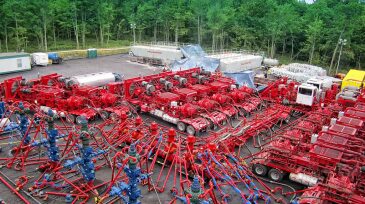
Unconventional resources are often in good supply, but difficult and expensive to develop. To develop unconventional resources, technologies like hydraulic fracturing and horizontal drilling are key, and higher oil prices will help.
-
This work presents a workflow that can be used to analyze and forecast time/rate data of wells in low-and ultralow-permeability reservoirs.
-
The careful planning and successful execution of a multistage-fracture-stimulation completion in one of the first horizontal wells (KZN-F) drilled in the Amin formation in north central Oman instigated a step change in initial production rate and long-term deliverability from this tight-gas-sandstone reservoir. The operator and service company worked as a team, modeli…
-
Drillstem testing of low-permeability reservoirs is challenging because high-pressure drawdown around the wellbore lowers fluids below saturation pressure and creates two-phase flow into the wellbore. The fluids produced at surface no longer represent the original reservoir fluid. This paper shows the benefits of a careful methodology of data selection and equation-of…
-
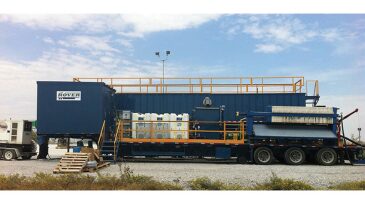
In this second article of a series covering water management in hydraulic fracturing (HF) in unconventional resources, the properties and characteristics of the flowback fluids are discussed, together with the general categories of technologies that are best suited to treat them.