Unconventional/complex reservoirs

The deal adds over 1,000 potential drilling locations and almost doubles oil production for Houston-based Magnolia.

Average output reached 13.6 million BOPD, extending a period of sustained growth that has kept the US at the forefront of global oil production.
The events will be co-located 3–5 May 2027 at Reliant Park in Houston, Texas.
-
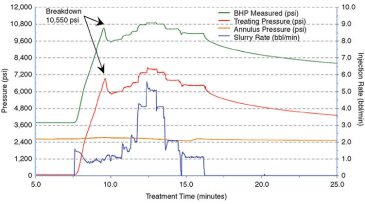
 In hydraulic fracturing, the use of diagnostic-fracture-injection tests (DFITs) can provide valuable information.
 -
History shows that technology adapts to the economic conditions. What is the optimum technology in a high-price environment is not optimum for a low-price scenario.
-
SPE Distinguished Lecturer Joseph Frantz, Jr. says stakeholder opinions will shape the future of hydraulic fracturing.
-
Downhole instrumentation of the Khazzan tight gas appraisal wells provides a rare opportunity to quantify reservoir pressure and temperature dynamics.
-
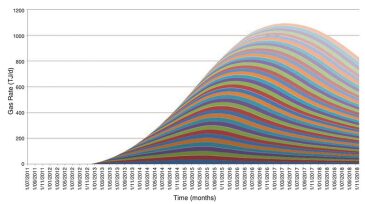
Queensland, Australia, is currently host to a number of coal-seam-gas (CSG) to liquefied-natural-gas (LNG) projects under development.
-
Surface jet pumps (SJPs) are simple, low-cost, passive devices that use a high-pressure (HP) fluid as the motive force to boost the pressure of produced-gas and -liquid phases.
-
The incredibly tight rocks that are the source of North America’s gas renaissance are off limits in Germany and France. Though Maersk drilled the first multifractured horizontal well in the North Sea in 1987, some European countries are now banning operations that have occurred legally for decades.
-
Drilling long horizontal wellbores and completing wells with multistage fracturing are common practices in shale-play development.
-
Hydraulically fracturing and stimulating multiple horizontal wells in sequence has been rapidly adopted by operators because of the potential for production without introducing unwanted risks.
-
At the Unconventional Resources Technology Conference in Denver, discussion revolved around solving problems below ground and above ground.