Unconventional/complex reservoirs

Transaction adds 90,000 net acres and 68,000 BOE/D of production as Crescent expands its South Texas footprint.

This paper aims to establish a set of best practices for generating particle-size-distribution data from core samples.

This paper discusses the successful execution of two openhole gravel-pack completions in two Gulf of Mexico fields with depleted reservoirs.
-
 The Sydney-based company announced it will also seek to exit all of its upstream permits with the exception of its major LNG joint venture.
 -
ADNOC awarded a new round of contracts to international service companies, intending to apply directional drilling and LWD to boost production by getting a better assessment of its reservoirs.
-
When Occidental Resources switched to bigger fracture designs to produce more oil, it produced more water as well. Based on research done since, they cannot have one without the other, and at the oil prices recently seen, that’s OK.
-
The authors of this paper use a pattern-review technique in a complex brownfield as a tool to understand reservoir connectivity and dynamic fluid movements across the field.
-
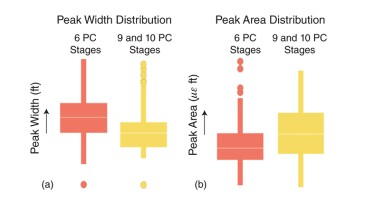
The authors of this paper describe a fiber-optic diagnostic method based on Rayleigh frequency shift that provides new insights about the characteristics of the near-wellbore region during production.
-
Glynn Williams, CEO of Silixa, offers his take on the role fiber-optic technology will play in the rise of CO2 storage and on the firm’s progress in the tight-rock sector.
-
The authors of this paper describe a project that integrates carbonate stratigraphic forward models of outcropping formations and reservoir-modeling work flows.
-
SponsoredQuickly identify the right strategies for a well or pad to overcome operational challenges. Explore cost-effective, easy-to-use solutions that help operators achieve better production rates with less manpower.
-
The Oklahoma City-based tight-oil producer has agreed to acquire Validus Energy.
-
Devon, Shell, and SM Energy offer some of their latest learnings from recent independent subsurface diagnostics projects. Their work underscores why this arena of technology has become a cornerstone for hydraulic-fracture design in tight-rock reservoirs.