Unconventional/complex reservoirs

Transaction adds 90,000 net acres and 68,000 BOE/D of production as Crescent expands its South Texas footprint.

This paper aims to establish a set of best practices for generating particle-size-distribution data from core samples.

This paper discusses the successful execution of two openhole gravel-pack completions in two Gulf of Mexico fields with depleted reservoirs.
-
 The shale sector is seeking answers to a complex issue involving casing deformations that block access to long sections of a lateral. As opposed to frac hits, this rising problem is considered to be an intrawell phenomena.
 -
The formula for value in a shale play used to be simple, lease acreage in the best quality rock based on Tiers cover large areas. That standard is fading as it has become obvious that the rock is highly variable and the drilling and completion designs are just as important.
-
The objective of this study is to show how the capacitance-resistance model (CRM) was used on this field and how it validated the use of other independent methods. This paper demonstrates that integration of different sources of data in reservoir management is critical.
-
Devon exits the asset that served as the company’s cornerstone for almost two decades and is known to the world as the birthplace of the shale revolution.
-
Fluid saturation isn't what it used to be when it comes to unconventional reservoirs. Our guest is among those sharing new research to discuss the shale sector’s changing perspectives on the importance of mobile hydrocarbons vs. immobile hydrocarbons.
-
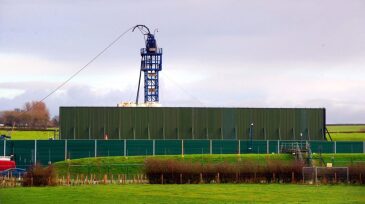
The decision comes 2 months after UK shale operator Cuadrilla Resources halted stimulation work at its Preston New Road site in Lancashire because of a magnitude 2.9 seismic event.
-
The complete paper describes a Monte Carlo simulation approach and field analysis showing that a small-scale GTL plant in North Dakota could be a profitable solution to mitigating the state’s current flaring rate of 35% of the natural gas produced.
-
The summer of 2019 has been rife with media reports about negative gas pricing in the Permian and, given the propensity of our industry to pick a favorite horse and then all pile on it at the same time, it is not surprising when we create our own boom and bust cycles.
-
This study focus on the design and evaluation of a customized water-based mud (NP-WBM) using silica oxide nanoparticles (SiO2-NPs) and graphene oxide nanoplatelets (GNPs).
-
The new numbers for the Marcellus Shale and Point Pleasant-Utica Shale represent large increases from previous USGS assessments of both formations.