Unconventional/complex reservoirs

This paper documents the testing, integration, and field deployment of a metal expandable packer used as an openhole toe isolation plug in a deepwater well under high-pressure, high-temperature conditions.

This paper aims to establish a set of best practices for generating particle-size-distribution data from core samples.

This paper discusses the successful execution of two openhole gravel-pack completions in two Gulf of Mexico fields with depleted reservoirs.
-
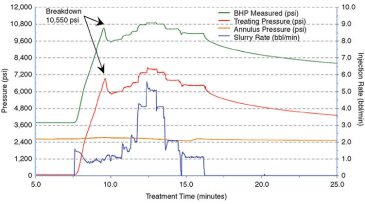
 In hydraulic fracturing, the use of diagnostic-fracture-injection tests (DFITs) can provide valuable information.
 -
History shows that technology adapts to the economic conditions. What is the optimum technology in a high-price environment is not optimum for a low-price scenario.
-
SPE Distinguished Lecturer Joseph Frantz, Jr. says stakeholder opinions will shape the future of hydraulic fracturing.
-
Downhole instrumentation of the Khazzan tight gas appraisal wells provides a rare opportunity to quantify reservoir pressure and temperature dynamics.
-
Queensland, Australia, is currently host to a number of coal-seam-gas (CSG) to liquefied-natural-gas (LNG) projects under development.
-
Surface jet pumps (SJPs) are simple, low-cost, passive devices that use a high-pressure (HP) fluid as the motive force to boost the pressure of produced-gas and -liquid phases.
-
The incredibly tight rocks that are the source of North America’s gas renaissance are off limits in Germany and France. Though Maersk drilled the first multifractured horizontal well in the North Sea in 1987, some European countries are now banning operations that have occurred legally for decades.
-
Drilling long horizontal wellbores and completing wells with multistage fracturing are common practices in shale-play development.
-
Matrix acidizing is commonly used as a preflush to the hydraulic-fracturing stimulation of shale formations. The process dissolves sediments and mud solids that inhibit the permeability of the rock, enlarging the natural pores of the reservoir and stimulating flow of hydrocarbons.
-
With the industry moving forward with exploration and development in the broader categories of unconventional resources globally, it is of paramount importance to assess and improve the different methods and tools for estimating reserves, to establish their accuracy and credibility.