Water management
This paper presents an approach to the identification, selection, and implementation of initiatives for sustainable water management, withdrawal reduction, and water valorization.

Disposal wells remain the lowest-cost solution for produced water, but concerns over seismicity and long-term sustainability are accelerating interest in alternatives.

This article addresses the challenges of managing water-soluble organics (WSOs) in offshore produced water. It provides a brief discussion of the chemistry, along with strategies and technologies that can be used to manage WSO levels in produced water, thus facilitating compliance with regulatory overboard water-quality guidelines.
-
 Select Water Solutions will focus on water management and added assets in the Permian Basin.
 -
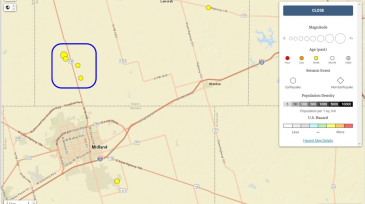
The recent Permian Basin earthquakes in Texas are keeping producers, regulators, and service providers busy in their quest to reduce the intensity and frequency of the induced seismic events.
-
A town in the oil industry’s shadow grapples with health fears as the state fails to limit companies’ use of fresh water.
-
Before 2012, water management for unconventional oil and gas plays was in its infancy and was trying to keep up with operations. Today, many of the initial challenges have been resolved but new challenges persist. What does the future hold for water in the US onshore unconventional plays?
-
The Railroad Commission of Texas is inspecting injection wells in the Gardendale Seismic Response Area where a magnitude 5.3 earthquake and multiple aftershocks struck.
-
The Evolution Pipeline System will help to mitigate Permian Basin seismicity through produced water recycling and diversion of produced water from areas of high seismicity.
-
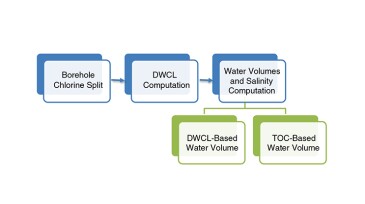
This paper provides a work flow based on research in two methodologies to estimate formation-water salinity, enhancing the quality of saturation evaluation for quick decision-making during logging operations.
-
This paper presents field cases of a rigless wireline logging technique that accurately locates sources of water production in cased wells with standalone sand screens in an offshore field in the Caspian Sea.
-
This paper presents case studies of how produced-water salinity data was used to transform the performance of two oil-producing fields in Nigeria.
-
The three papers chosen for publication share different approaches to chemically managing high-salinity produced water through commercially viable approaches. The identification of processes to treat high salinity levels and the approaches to alter and control the process make the papers not only good for discussion but also practical for all players, big and small.