Water management
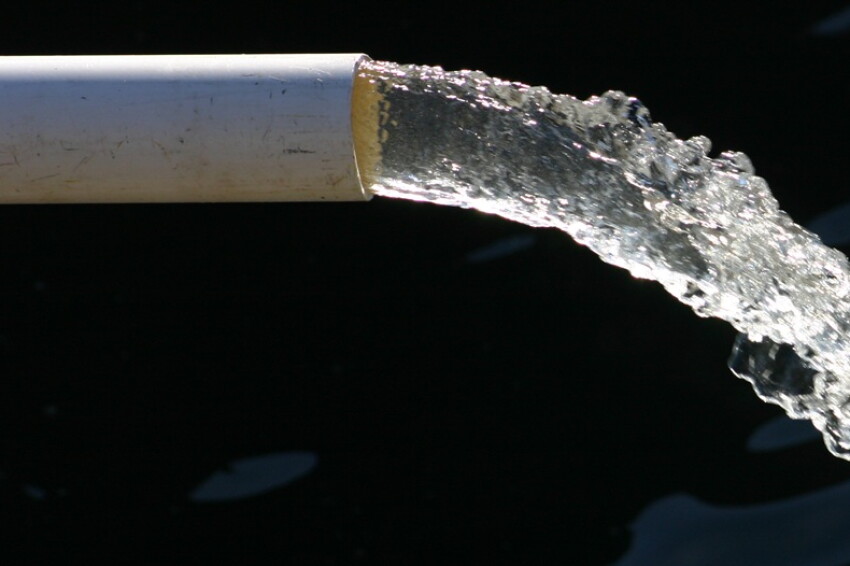
This paper presents an approach to the identification, selection, and implementation of initiatives for sustainable water management, withdrawal reduction, and water valorization.

Disposal wells remain the lowest-cost solution for produced water, but concerns over seismicity and long-term sustainability are accelerating interest in alternatives.

This article addresses the challenges of managing water-soluble organics (WSOs) in offshore produced water. It provides a brief discussion of the chemistry, along with strategies and technologies that can be used to manage WSO levels in produced water, thus facilitating compliance with regulatory overboard water-quality guidelines.
-
 Signed into law last month, the Texas Produced Water Consortium will be hosted by Texas Tech and bring together stakeholders, key experts, and industry to address produced water challenges.
 -
A 2-year study of a formation used for saltwater disposal in the Bakken may hold promise of decreasing the pressurization of the formation and increasing the reuse of the briny produced water.
-
This latest project will build on a previous initiative with up to a trio of field trials aimed at supporting regulatory authorities and industry to establish new standards and practices for the use of online oil-in-water analyzers at remote locations.
-
Acknowledging the necessity to better understand treatment needs, economic challenges, and public health and environmental risks of industry’s waste water, the Texas Legislature recently passed Senate Bill 601, establishing a Texas Produced Water Consortium.
-
In the original grant application for renewable desalination, the startup mentioned solar thermal, but Gary Katz had originally thought industrial waste heat energy would be the ideal source. But, as he noted ruefully, “As a startup, you have to pivot to what the market will support."
-
Added assets raise its Delaware Basin daily disposal capacity to more than half a million barrels.
-
Expansion of operations in the Permian Basin has spawned a midstream water segment – one that uses data and analysis to enhance efficiency as well as manage produced water volumes.
-
Shell and Tomson Technologies completed field trials in the Gulf of Mexico using new nanoparticle-enabled phosphonate and polymer inhibitors that improve the treatment lifetime of scale squeezes.
-
While it is one of the top producers of liquid hydrocarbons in the US, New Mexico is also among the driest. The issue has culminated in a restriction on new freshwater leases issued by the state and a push for more recycling of produced water.
-
The last growing market of US land services, water disposal, is set for an all-time high in the Permian.