Well integrity/control

How OSRL, InterMoor, and Oceaneering adapted existing technologies into a method for landing a capping stack on a shallow-water well.

A report commissioned by Havtil, the Norwegian Ocean Industry Authority, calls for better dialogue regarding pore-pressure uncertainty and higher-end drilling techniques like managed pressure drilling as methods to reduce the risk of well-control events.

This paper presents a study that confirms glass-reinforced-epoxy-lined tubing as a reliable, cost-effective solution for long-term water-injection service in moderate-salinity offshore environments.
-
 The US Chemical Safety Board will investigate the blowout that killed three workers at a Chesapeake Energy well in central Texas.
-
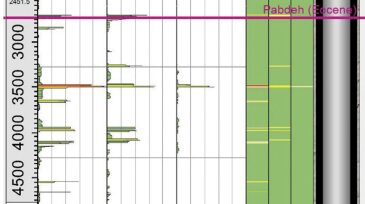
This case study discusses the methodology that underlies the successful determination of the depths and the radial locations in the outer casing strings of multiple leaks in an offshore well.
-
Fiber-optic technologies—distributed temperature sensing and distributed acoustic sensing—have been experiencing an ever-increasing number of applications in the oil and gas industry as monitoring systems.
-
This paper focuses on the preparation for, and implementation of, well-control training, while highlighting the integration of people skills into curricula and what advantages operators and drilling contractors have obtained.
-
This paper describes the mobilization of a snubbing unit and blowout preventer (BOP) stack in the Middle East that enabled a well with an underground blowout and surface broaching to be brought under control within a short time.
-
Regulators say the blowout that killed five workers on a Patterson-UTI rig in Oklahoma was the product of a slow-moving series of missed signals, misleading testing, and miscalculations that failed to control a natural gas influx.
-
The new well control rule is evidence that memories of the Macondo blowout remain a powerful force for caution. Despite the rhetoric on both sides of this hot-button issue suggesting big changes, the final changes were incremental.
-
Three onshore fields in the Emirate of Sharjah, United Arab Emirates, have more than 30 years of production history from more than 50 gas-condensate wells.
-
This paper describes how a technique known as applied-surface-backpressure managed-pressure drilling (ASBP-MPD) can alleviate the limitations of conventional deepwater well control.
-
Nonaqueous drilling fluids, such as synthetic-based and oil-based mud (SBM and OBM, respectively), are used frequently to drill one or more sections of a well to reduce drilling problems such as shale sloughing, wellbore stability, and stuck pipe.