Testing page for app
-
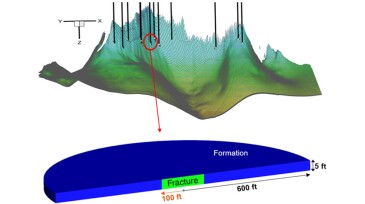
 This paper describes a full-field and near-wellbore poromechanics coupling scheme used to model productivity-index degradation against time.
 -
This year’s history matching and forecasting selections cover a deep-learning framework to forecast spatial/temporal dynamics of CO2 mineralization in reactive rocks, productivity decline analysis using coupled full-field and near-wellbore poromechanics modeling, and a reservoir graph network model for multiwell forecasting in unconventional reservoirs.
-
Updates about global exploration and production activities and developments.
-
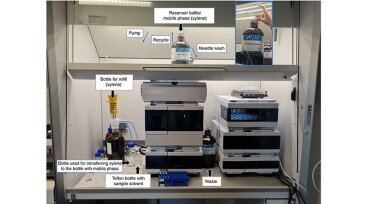
The use of oil-based muds has precluded countless drill cuttings from being used to predict reservoir fluids despite once being part of the reservoir. A 6-decade-old technology may be on the cusp of changing that.
-
-
To avoid costly interventions like sidetracking or wellbore abandonment, a check-valve system was installed near the sandface within three injector wells which prevented the mobilization of fines from the reservoir into the wellbore by stopping backflow.
-
From the first supercomputer to generative AI, JPT has followed the advancement of digital technology in the petroleum industry. As the steady march of innovation continues, four experts give their views on the state and future of data science in the industry.
-
The challenges that geothermal energy faces to become a leading player in the net-zero world are well within the areas of expertise of the SPE community, ranging from rapid technology implementation and learning-by-doing to assure competitiveness to establishing suitable funding mechanisms to secure access to capital.
-
Pink hydrogen, produced through water electrolysis powered by nuclear energy, recently drew attention which underscored the complexity of decision-making in advancing such projects.
-
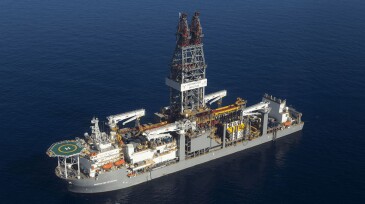
The Mexican state oil company turns to the bit in a bid to add meaningful reserves from the deep Mexican Gulf.