Testing page for app
-
 The technical arena of oilfield chemistry, both that of the natural downhole environment and that of chemistry introduced downhole, provides a rich testing ground for advanced uses of data. Whereas early uses of data in the upstream chemical space included use of design of experiment for vetting or developing new chemistries, today, data analytics enables, for example…
 -
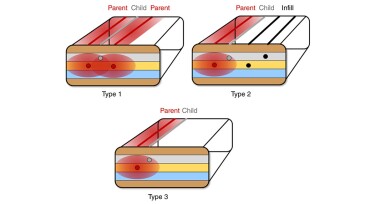
The authors of this paper analyze a robust, well-distributed parent/child well data set using a combination of available empirical data and numerical simulation outputs to develop a predictive machine-learning model.
-
While rapid production growth comes with proportional risks, it becomes crucial for reservoir surveillance engineers to quickly identify, derisk, and mitigate subsurface performance uncertainties. In this demanding scenario, the need for high-frequency reservoir performance surveillance is more critical than ever. Fortunately, advanced technologies have emerged as a r…
-
This paper summarizes a collaborative industry study to compare observations between shale-play data sets and basins, develop general insights into parent/child interactions, and provide customized economic optimization recommendations.
-
In this paper, example machine-learning models were trained using geologic, completion, and spacing parameters to predict production across the primary developed formations within the Midland Basin.
-
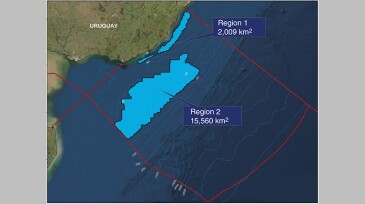
The authors of this paper present the results of an assessment of two regions in Uruguay suitable for bottom-fixed offshore wind technologies.
-
Green hydrogen (i.e., hydrogen produced through electrolysis using electricity generated from the likes of wind turbines and solar panels) is growing rapidly in popularity as a successor to hydrocarbon fuel. … It is worth noting that hydrogen does have some issues, which, to be fair, have yet to be overcome.
-
New studies are a reminder that the effort to identify, classify, and nullify frac hits remains paramount to the future of the unconventionals business.
-
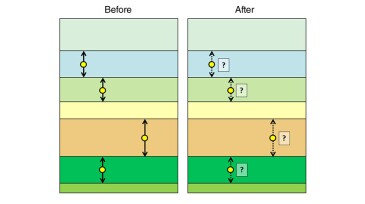
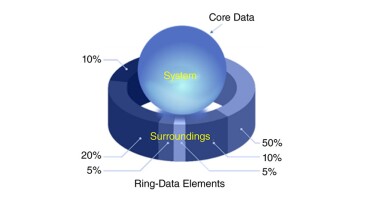
The authors of this paper describe a technology built on a causation-based artificial intelligence framework designed to forewarn complex, hard-to-detect state changes in chemical, biological, and geological systems.
-
The discovery in Putumayo could benefit from nearby existing infrastructure.