Testing page for app
-
 Malaysia’s push to explore energy blocks off its coast has turned into a five-nation face off involving US and Chinese warships, raising the risk of a direct confrontation as broader tensions grow between the world’s biggest economies.
 -
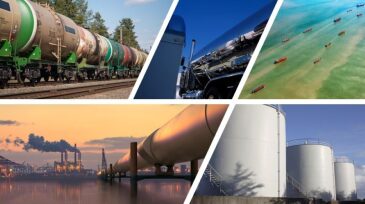
No vacancy? The hunt for global alternatives to store crude oil includes offshore, global strategic reserves, pipelines, rail cars, and trucks.
-
While sustainability is approached through various means within the industry, at its core is the welfare of human beings. Recent SPE papers demonstrate the importance of human rights in the industry’s drive toward sustainability.
-
There are numerous views of what the future energy landscape will look like in the next decade and beyond. When thinking about sources of primary energy, it is not a question of either/or, it is a question of what can reach scale fast enough to meet continued demand growth.
-
Drilling still depends on human judgment to solve many problems. Some of the problems are big, and others are related to niggling details. This article discusses three innovations aimed at improving the data flows.
-
No company or organization could have predicted our industry would be facing a viral pandemic, coupled with oil prices at their lowest levels in almost 2 decades. This is a time to put our heads together and come up with a new plan. This is what oil and gas does best.
-
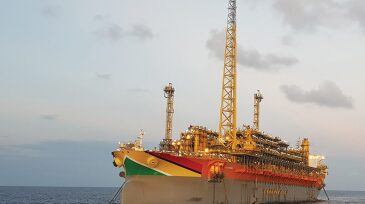
Putting together the billions of dollars needed to develop deepwater finds has become tougher, but when the discoveries are huge, companies will make every effort to find a way to tap what may be a cheap source of oil.
-
For the offshore sector, the collapse in oil demand and prices came just as the market was beginning to look up. Now many companies are focused on survival. This article discusses how various market segments, regions, and companies are faring in “the new reality.”
-
Researchers use novel methodology to measure the thermo-electric properties of native crude.
-
Faster drilling speeds have become one of the major obsessions of the shale sector in recent years. But since completions represent up to 70% of a new well’s cost, maybe this side of the business needs more attention now.