Testing page for app
-
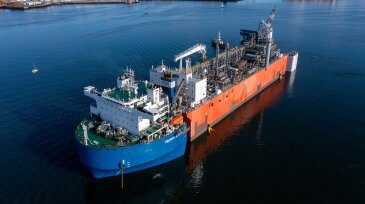
 Congo LNG, expected to hit capacity in 2025, aims to transform the African country into a natural gas exporter.
 -
While the industry is adopting the technology, one expert highlights areas where the oil and gas sector could speed up the adoption of artificial intelligence.
-
SponsoredThis Q&A highlights the benefits of AI and ML to automate work flows and analyze data at a much faster rate—within minutes. These capabilities deliver a fit-for-basin approach designed specifically for US-centric work flows.
-
This paper proposes a series of work flows to simplify model deployment and set up an automatic advisory system to provide insight in justifying an engineer’s day-to-day engineering decisions.
-
This paper describes an intelligent completion design installed in two deepwater wells with dual-zone stack-pack sand-control lower completions and the installation of an intermediate string to isolate the reservoir in each zone.
-
The authors of this paper discuss deep closed-loop geothermal systems as an alternative to traditional enhanced geothermal systems for green energy production that is globally scalable and dispatchable.
-
The first paper selected for this Intelligent Fields Technical Focus presents the use of a unique artificial-intelligence technique from the fourth industrial revolution—dual heuristic dynamic programming—to address business opportunities associated with optimization.
-
Considering the admirable perpetual transformation of the deepwater sector and the crucial impetus for change in the industry, the yearning for aggrandized and augmented innovative advancements is needed more now than ever.
-
The domain expertise and technologies in the oil and gas industry such as integrated project planning and operating, extended-reach drilling (ERD), high-pressure/high-temperature drilling tools, multilateral drilling and completions, geomechanics, flow and thermal dynamics modeling, and artificial intelligence have been fueling the ongoing march for new records on ERD…
-
This paper presents a laboratory-based study that compares the three methods to measure static gel-strength development that are widely accepted in the industry.